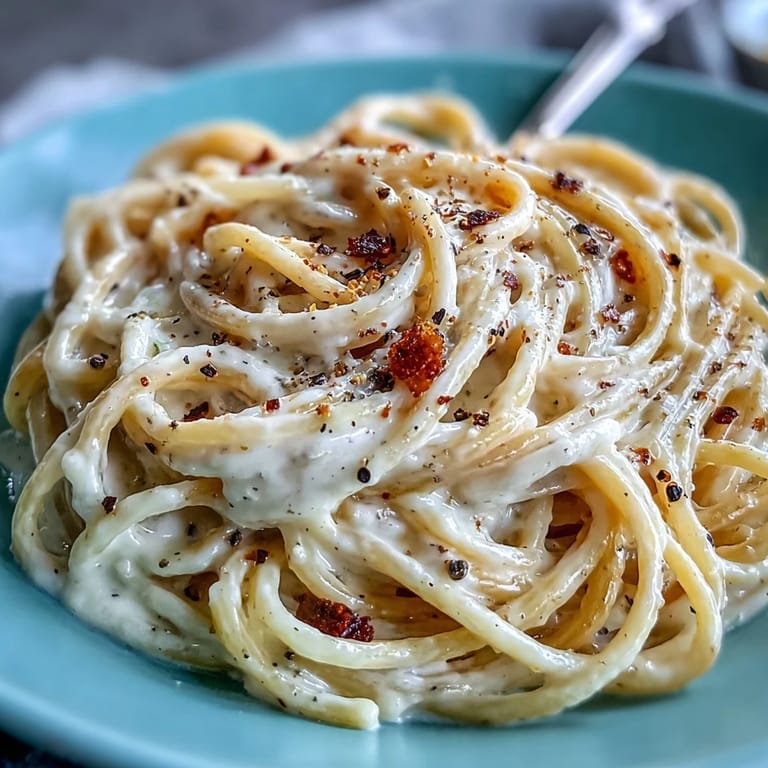
 Pin It
 My cousin Marco showed me this on a Tuesday night when I had nothing but dried pasta and a wedge of cheese I'd been hoarding. He laughed at my fancy pepper grinder and insisted I crush the peppercorns with the bottom of a pan instead. The smell that rose from the skillet when those cracked bits hit the hot water made me understand why Rome never needed more than three ingredients. I've made it dozens of times since, and it still surprises me how something so plain on paper can taste so alive.
I made this for my neighbor after she helped me move a couch up three flights of stairs. She stood in my tiny kitchen, skeptical that cheese and pepper could be dinner, but after the first twirl of spaghetti she closed her eyes and nodded. We didn't talk much after that, just ate with the windows open and the sound of the city humming below. She still asks for it every few months, always with that same quiet nod.
Ingredients
- Spaghetti or tonnarelli: Tonnarelli is thicker and holds the sauce better, but spaghetti is easier to find and works beautifully if you don't overcook it.
- Pecorino Romano cheese: This is the backbone of the dish, sharp and salty and nothing like the bland stuff in plastic tubs, so grate it fresh from a block or don't bother.
- Whole black peppercorns: Toasting them wakes up oils you didn't know were there, turning pepper from an afterthought into the co-star it deserves to be.
- Kosher salt: For the pasta water, which should taste like the sea and will later become the silky base of your sauce.
- Unsalted butter (optional): Not traditional, but a small knob melted in at the end adds a gloss that makes the sauce cling like it's been simmering for hours.
Tired of Takeout? 🥡
Get 10 meals you can make faster than delivery arrives. Seriously.
One email. No spam. Unsubscribe anytime.
Instructions
- Boil the pasta:
- Bring a large pot of water to a rolling boil, salt it generously, and cook the spaghetti until it still has a firm bite, about a minute shy of the package time. Scoop out 1½ cups of that cloudy, starchy water before you drain anything, because that liquid is your secret weapon.
- Toast the pepper:
- While the pasta bubbles away, heat a large dry skillet over medium and add the cracked peppercorns, shaking the pan until they smell toasty and almost floral, about a minute. Don't walk away or they'll burn and turn bitter.
- Build the base:
- Pour 1 cup of the reserved pasta water into the skillet with the toasted pepper and lower the heat. Let it simmer gently while you wait for the pasta to finish.
- Combine pasta and pepper water:
- Add the drained spaghetti to the skillet and toss it around, letting the noodles drink up some of that peppery, starchy liquid. The pasta should glisten and start to look a little creamy even before the cheese arrives.
- Add the cheese:
- Pull the skillet off the heat and sprinkle in the grated Pecorino a handful at a time, tossing constantly with tongs so it melts into a sauce instead of clumping into rubbery bits. If it looks tight or grainy, splash in more reserved water and keep tossing until it loosens and turns glossy.
- Finish and serve:
- If you're using butter, drop it in now and toss until it disappears into the sauce. Plate immediately, top with more cheese and pepper, and eat it hot before the magic fades.
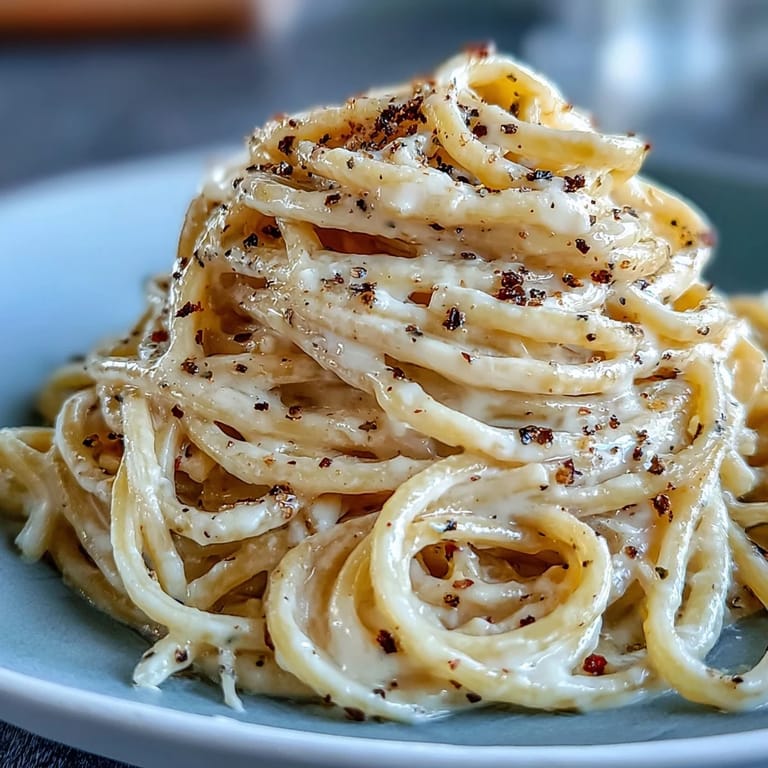 Pin It
 One night I made this for a friend who'd just been dumped, and we ate it straight from the skillet with two forks and a bottle of cheap wine. She said it tasted like proof that good things don't have to be complicated, and I think about that whenever I'm tempted to add garlic or cream or anything else that would just get in the way. Sometimes the simplest version is the one that sticks.
Choosing Your Pasta
Tonnarelli is the traditional choice in Rome, thicker and square-cut so it grabs onto every bit of sauce and pepper. Spaghetti is thinner and more delicate, but it twirls beautifully and is what most of us have in the cupboard. I've used both and honestly, the technique matters more than the shape, so don't stress if you can't find the authentic stuff. Just cook it right and save that starchy water.
Getting the Sauce Right
The creaminess comes from the marriage of hot starchy water and finely grated cheese, whisked together off the heat so the Pecorino melts instead of splitting. I used to rush this part and end up with clumps of cheese floating in oily water, which taught me that patience and a good tossing motion are non-negotiable. If the sauce looks too thick, add water a tablespoon at a time. If it's too thin, let it sit for thirty seconds and the pasta will soak it up.
Serving and Storing
Cacio e pepe is best eaten the moment it's done, still steaming in the bowl with the cheese barely set. Leftovers turn gummy and sad in the fridge, though you can revive them a little with a splash of water in a hot pan. I usually make only what I'll eat right then, because this dish is about the instant it comes together, not the reheating.
- Serve it in warm bowls so the sauce doesn't cool and thicken too fast.
- Keep extra grated Pecorino and cracked pepper at the table for anyone who wants more bite.
- Pair it with a crisp white wine like Frascati or Vermentino, something bright enough to cut through the richness.
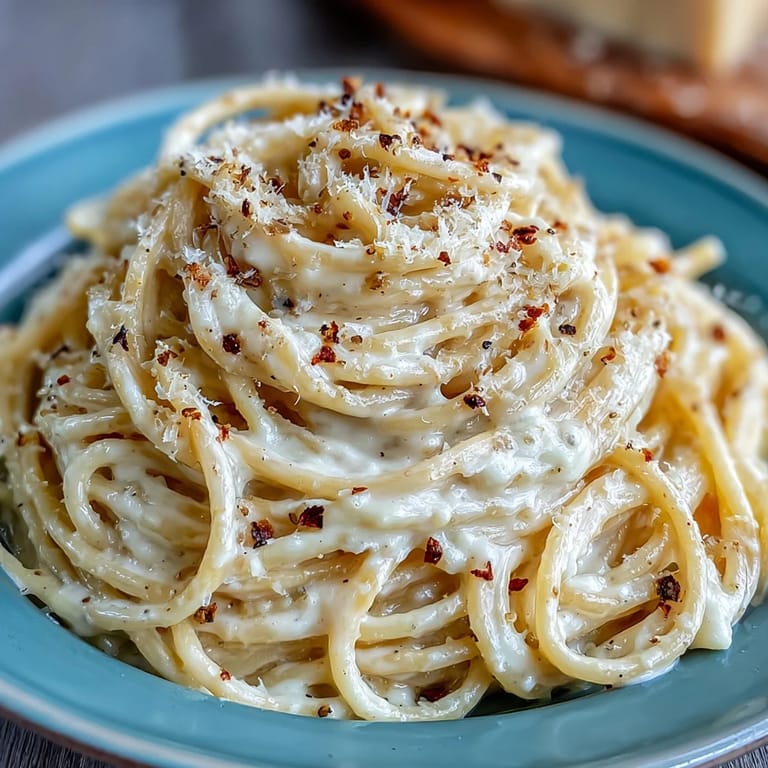 Pin It
 This is the kind of dish that makes you feel competent in the kitchen even on nights when everything else is a mess. Keep the ingredients around and you'll never be more than twenty minutes from something that tastes like you care.
Recipe Q&A
- → Why does my Pecorino clump instead of forming a creamy sauce?
The cheese must be added off heat with vigorous tossing. High temperatures cause the proteins to seize. Use finely grated cheese and add pasta water gradually while stirring constantly to create an emulsion.
- → Can I substitute Parmesan for Pecorino Romano?
While Parmesan works in a pinch, Pecorino Romano's sharp, salty tang is essential to authentic Cacio e Pepe. The flavor profile changes significantly with Parmesan, making it a different dish entirely.
- → What type of pasta works best?
Tonnarelli, a square-cut spaghetti, is traditional in Rome. Regular spaghetti, bucatini, or linguine are excellent alternatives. The key is using long pasta that holds the sauce well.
- → How do I prevent the pasta water from making the dish watery?
Add pasta water in small increments, allowing each addition to be absorbed before adding more. The starch in the water creates creaminess, but too much dilutes the sauce. Start with a quarter cup and adjust.
- → Should I toast the peppercorns whole or cracked?
Crack them first, then toast. This releases the aromatic oils immediately when heated, infusing the pasta water with deeper pepper flavor compared to toasting whole peppercorns.
- → Can this be made ahead or reheated?
Cacio e Pepe is best served immediately. The sauce breaks and separates when cooled. If necessary, reheat gently with additional pasta water, stirring constantly to re-emulsify the cheese.