 Pin It
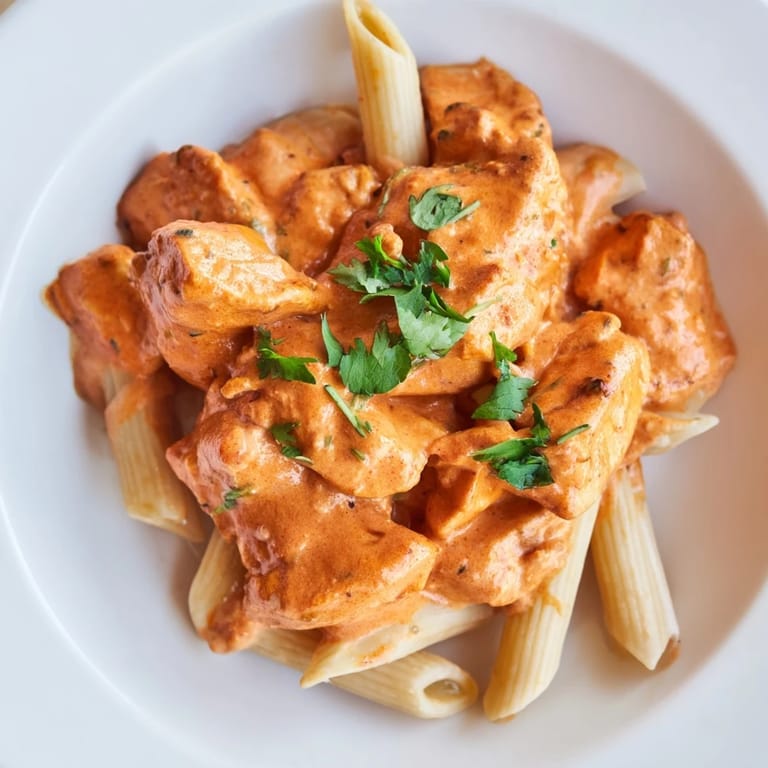
 My neighbor Priya once brought over a Tupperware of something she called "fusion magic," and I honestly thought she was joking until I tasted it. Creamy tomato pasta studded with smoky, spiced chicken that tasted like it came straight from a tandoor. I stood in her doorway with a fork, speechless, until she finally laughed and said I could have the recipe if I promised to stop eating out of the container. That night changed how I thought about mixing cuisines.
I made this for a potluck once, skeptical that anyone would go for something so unconventional. By the time I looked up from chatting, the entire dish was gone and two people were scraping the sides of the pan with serving spoons. One friend even texted me later that week asking if I could teach her how to make it for her picky husband. It became my signature bring-along after that.
Ingredients
- Boneless chicken breast or thigh (500 g): Thigh meat stays more tender and juicy, but breast works beautifully if that is what you have on hand.
- Plain yogurt (120 g): This is your tenderizer and flavor carrier, so use full-fat for the best marinade texture.
- Lemon juice (2 tbsp): Adds brightness and helps break down the chicken fibers so every bite is soft.
- Garlic (2 cloves for marinade, 2 for sauce): Fresh is non-negotiable here, the jarred stuff just does not have the same punch.
- Ginger (1 tbsp, grated): Grate it fine so it melts into the marinade and does not leave fibrous bits.
- Garam masala (1½ tsp for chicken, 1 tsp for sauce): The warm spice backbone of the whole dish, do not skip it or substitute with curry powder.
- Ground cumin (1 tsp): Adds earthiness that balances the creaminess of the sauce.
- Ground coriander (1 tsp): Subtle and citrusy, it rounds out the spice blend without overpowering.
- Paprika (1 tsp): For color and a gentle sweetness, smoked paprika works too if you want extra depth.
- Chili powder (½ tsp for marinade, ½ tsp for sauce): Adjust this based on your heat tolerance, it builds as it cooks.
- Salt (½ tsp plus more to taste): Season in layers, both in the marinade and the sauce, for balanced flavor.
- Vegetable oil (2 tbsp): Helps the marinade cling to the chicken and keeps it moist during cooking.
- Penne pasta (300 g): The ridges and tubes catch the sauce perfectly, but any short pasta works.
- Butter (1½ tbsp): Adds richness to the sauce base that oil alone cannot replicate.
- Onion (1 medium, finely chopped): Finely chopped means it melts into the sauce and creates a silky texture.
- Canned crushed tomatoes (400 g): The foundation of your sauce, good quality tomatoes make a noticeable difference.
- Tomato paste (2 tbsp): Concentrates the tomato flavor and thickens the sauce beautifully.
- Sugar (1 tsp): Balances the acidity of the tomatoes, you will not taste sweetness but you will miss it if you leave it out.
- Double cream (120 ml): This is what makes the sauce luxurious and ties the spices together.
- Whole milk (60 ml): Thins the cream just enough so the sauce coats the pasta instead of clumping.
- Fresh cilantro (2 tbsp, chopped): The final fresh note that makes everything taste alive and vibrant.
Tired of Takeout? 🥡
Get 10 meals you can make faster than delivery arrives. Seriously.
One email. No spam. Unsubscribe anytime.
Instructions
- Marinate the chicken:
- In a bowl, whisk together yogurt, lemon juice, garlic, ginger, garam masala, cumin, coriander, paprika, chili powder, salt, and oil until smooth. Toss in the chicken pieces and massage the marinade into every crevice, then cover and refrigerate for at least 30 minutes or up to overnight.
- Cook the chicken:
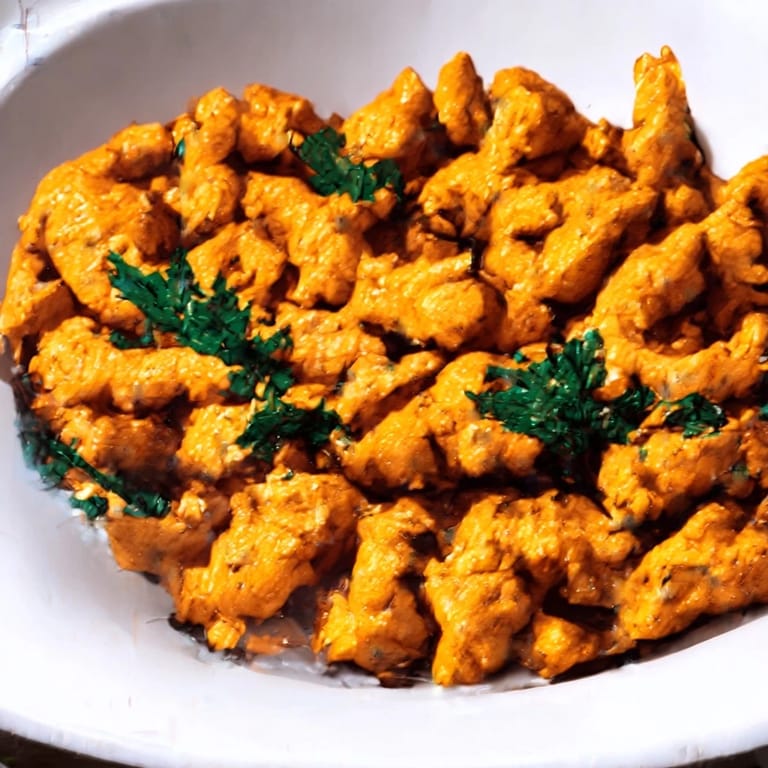
- Preheat your oven to 220°C or get a grill pan screaming hot over medium-high heat. Spread the marinated chicken on a lined baking tray or grill pan, giving each piece space to char. Roast or grill for 10 to 12 minutes until the edges are darkened and the chicken is cooked through, then set aside.
- Boil the pasta:
- Bring a large pot of salted water to a rolling boil and cook the penne until al dente, following the package timing. Drain in a colander and set aside, no need to rinse.
- Build the sauce base:
- Melt butter in a large skillet over medium heat, then add the chopped onion and cook for 3 to 4 minutes until softened and translucent. Stir in the garlic and cook for another minute until fragrant but not browned.
- Simmer the tomato sauce:
- Add crushed tomatoes, tomato paste, sugar, garam masala, and chili powder to the skillet, stirring well to combine. Let it simmer for 8 to 10 minutes, stirring occasionally, until the sauce thickens and the raw tomato flavor mellows.
- Make it creamy:
- Pour in the double cream and milk, season with salt and pepper, and stir gently. Simmer for another 2 minutes until the sauce is velvety and unified.
- Bring it all together:
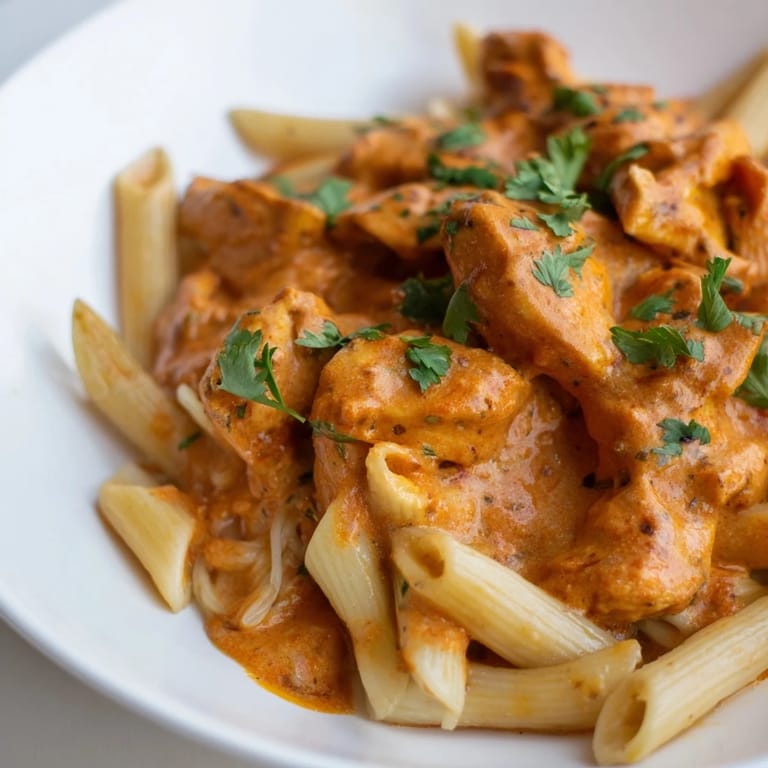
- Add the cooked chicken tikka pieces to the sauce, followed by the drained pasta. Toss everything together gently but thoroughly so every piece of pasta and chicken is coated in that spiced, creamy sauce.
- Garnish and serve:
- Sprinkle fresh cilantro over the top and serve immediately while everything is hot and glossy. Pass extra cilantro at the table for anyone who wants more.
 Pin It
 One evening I made this for my partner after a long week, and halfway through eating he looked up and said it tasted like a hug. I laughed, but I knew exactly what he meant. There is something about the warmth of the spices and the comfort of pasta together that feels like care in a bowl.
Adjusting the Heat Level
If you are cooking for a crowd with mixed spice tolerances, keep the chili powder on the lighter side and put hot sauce or crushed red pepper on the table. I learned this after watching my friend douse her serving in extra chili oil while her kids ate theirs plain and happy. You can always add heat, but you cannot take it away once it is in the pot.
Choosing the Right Pasta Shape
Penne is classic here because the tubes trap little pockets of sauce and chicken, but I have used rigatoni, fusilli, and even farfalle with great results. The key is picking something with enough surface area or crevices to hold onto that creamy, spiced coating. Avoid long pastas like spaghetti, they just slide around and do not deliver the same satisfying bite.
Serving Suggestions and Sides
This dish is rich and filling, so I like to serve it with something crisp and light on the side. A simple arugula salad with lemon vinaigrette cuts through the creaminess perfectly. Garlic naan or warm pita is also a favorite for scooping up any extra sauce left on the plate.
- A squeeze of fresh lemon juice over the top before serving brightens everything up.
- Leftovers reheat beautifully with a splash of milk to loosen the sauce.
- If you want to meal prep, store the chicken and sauce separately from the pasta to avoid sogginess.
 Pin It
 This recipe has become my go-to when I want to feel like I am treating myself and anyone I am cooking for. It is indulgent, surprising, and always worth the effort.
Recipe Q&A
- → Can I make the chicken tikka ahead of time?
Yes, marinating the chicken overnight enhances flavor development. You can also prepare and roast the chicken 2-3 hours in advance, then reheat gently before combining with the pasta sauce.
- → What pasta shapes work best with this sauce?
Penne, fusilli, and rigatoni all work excellently as they hold the creamy sauce well. Avoid thin pastas like spaghetti that may become oversauced.
- → How can I reduce the dairy content?
Replace double cream with half-and-half or evaporated milk for a lighter version. You can also reduce cream quantity to 60ml and increase milk to 120ml while maintaining a creamy texture.
- → Is this suitable for meal prep?
Store components separately: keep chicken tikka and sauce in airtight containers for up to 3 days. Cook pasta fresh before serving to prevent sogginess, then combine all elements.
- → How do I achieve the charred effect on chicken?
Use a preheated 220°C oven or grill pan over medium-high heat. Don't overcrowd the pan—cook in batches if needed. The high heat caramelizes the marinade's surface for authentic tikka flavor.
- → Can I use Greek yogurt instead of plain yogurt?
Greek yogurt works but use slightly less (90-100g) as it's thicker and more acidic. It may require longer marinating time for the chicken to absorb flavors properly.