 Pin It
 There's something about the smell of butter hitting a hot pan that makes me feel like I'm in a proper kitchen, not just my small apartment. Years ago, I was obsessed with both French toast and grilled cheese separately, eating one for breakfast and saving the other for lunch, until my roommate suggested I stop being so indecisive and combine them. The first attempt was a beautiful disaster—custard everywhere, cheese sliding out the sides—but somehow, miraculously, it worked. Now this dish is my answer to almost every question about what to cook.
I made this for my sister on a random Saturday morning when she showed up unannounced, and watching her face when that first bite released all that warm cheese made every little mess on my stovetop worth it. She's not easily impressed, but she asked for the recipe before she'd even finished her plate, and now it's become our tradition whenever she visits.
Ingredients
- Eggs: Three large ones create a silky custard base that clings beautifully to the bread without making it soggy if you're quick.
- Whole milk and heavy cream: This combo gives you richness that plain milk can't match, and the cream keeps things luxurious.
- Granulated sugar: Just enough to balance the savory elements without making this taste like dessert.
- Kosher salt and black pepper: Season generously; this is where most home cooks hold back and regret it.
- Dijon mustard (optional): A small spoonful adds a subtle sharpness that makes people wonder what's different.
- Brioche or challah bread: Use thick slices because thin bread falls apart when it hits the custard, and you want substance here.
- Gruyère or sharp cheddar cheese: Pick cheese that melts smoothly; low-quality cheese turns waxy instead of gooey.
- Unsalted butter and neutral oil: Butter burns too easily on its own, so the oil prevents that while you still get that incredible butter flavor.
Tired of Takeout? 🥡
Get 10 meals you can make faster than delivery arrives. Seriously.
One email. No spam. Unsubscribe anytime.
Instructions
- Make the custard base:
- Whisk eggs, milk, cream, sugar, salt, pepper, and mustard together in a shallow bowl until it's completely smooth and pale. Don't rush this step because unmixed yolk streaks will show up as uneven cooking.
- Build your sandwiches:
- Lay out bread slices and stack two cheese slices on each, then cap with another bread slice. This double cheese layer is non-negotiable for that molten center.
- Get your pan ready:
- Heat your skillet over medium heat until a drop of water sizzles immediately but doesn't dance violently off the surface. Add butter and oil, letting them foam and coat the whole pan.
- Dip with intention:
- Dunk each sandwich into the custard—count to two on each side to get it saturated but not waterlogged. This timing is everything.
- Cook until golden:
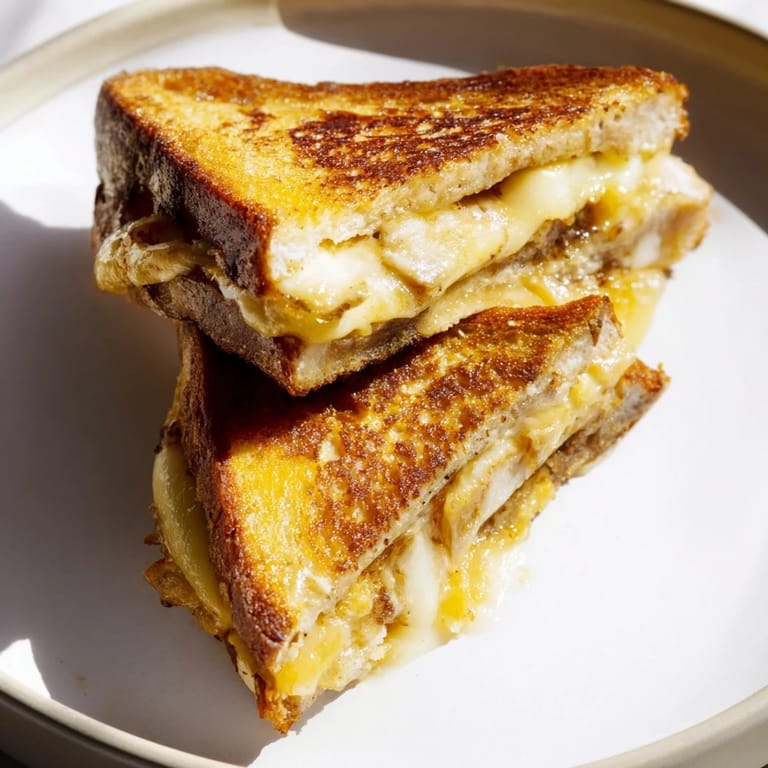
- Place sandwiches in the pan and resist the urge to move them around constantly; let them sit for 3–4 minutes until the underside turns deep golden and crispy. Flip gently, press down slightly to help the cheese melt, and cook the other side the same way.
- Rest and serve:
- Let the sandwiches rest for a couple of minutes so the cheese stops actively melting and firms up just enough to handle without losing its creaminess. Slice and eat while still warm.
 Pin It
 I remember the first time I served this to someone I wanted to impress, and the way their eyes widened when they bit through that golden crust into all that warm cheese felt like I'd done something genuinely special. It's funny how a dish this indulgent can actually make you feel like a better cook.
The Sweet-Savory Debate
At some point, I started experimenting with thin layers of fig jam or caramelized onions tucked in with the cheese, and honestly, it shouldn't work this well. The jam adds this sophisticated sweetness that plays against the cheese without being obvious about it, while caramelized onions bring an earthy depth that makes the whole thing taste more grown-up. I've learned that one ingredient shouldn't overwhelm the others; it should whisper, not shout.
Cheese Choices and What Happens
Gruyère melts like a dream and brings this nutty undertone that feels fancy without trying, but sharp cheddar works beautifully too if that's what's in your fridge. I've tried Swiss, mozzarella, and fontina on different occasions, and each one changes the personality of the dish slightly. The truth is, any cheese worth eating by itself is worth putting in this sandwich; just avoid pre-sliced American cheese because it has additives that make it behave weird.
Building Your Complete Meal
Serve this on its own and it's indulgent enough, but pairing it with something fresh and slightly acidic makes the whole meal feel balanced and intentional. A simple green salad with vinaigrette or a warm bowl of tomato soup both ground this dish in a way that makes it feel less like breakfast decadence and more like something you could eat any time of day. You'll find yourself thinking about this combination long after you've finished eating.
- Make a simple arugula salad with lemon vinaigrette to cut through the richness.
- Pair it with tomato soup for comfort food that actually tastes sophisticated.
- A light side salad keeps everything from feeling too heavy despite how rich the main event is.
 Pin It
 This dish taught me that some of the best ideas come from wanting two things at once and being stubborn enough to try combining them. It's become my favorite thing to make when I want to feel accomplished in the kitchen without actually working too hard.
Recipe Q&A
- → What type of bread works best for this dish?
Thick slices of brioche or challah bread are ideal as they absorb the custard well while maintaining structure during cooking.
- → Which cheeses complement the custard-soaked bread?
Gruyère and sharp cheddar provide a rich, melty texture, but Swiss, mozzarella, or fontina also work beautifully.
- → How can I prevent the sandwiches from becoming soggy?
Dip the bread briefly in the custard, ensuring it's coated but not soaked through, then cook immediately over medium heat for a crisp finish.
- → Can I prepare the sandwiches ahead of time?
Yes, assemble and refrigerate the sandwiches, then dip and cook just before serving to maintain freshness and texture.
- → Are there flavor variations recommended?
Adding fig jam or caramelized onions inside introduces a delightful sweet-savory twist to the creamy, cheesy filling.