 Pin It
 The kitchen smelled like a spice market the first time I opened that little jar of five-spice powder, all star anise and clove warmth mingling with something I couldn't quite name. My neighbor had just returned from Shanghai and handed me a whole duck with a grin, saying only, Trust me. I stood there holding this bird, slightly panicked, until I remembered my grandmother's rule: when in doubt, marinate everything. That duck taught me more about patience and heat than any culinary school ever could.
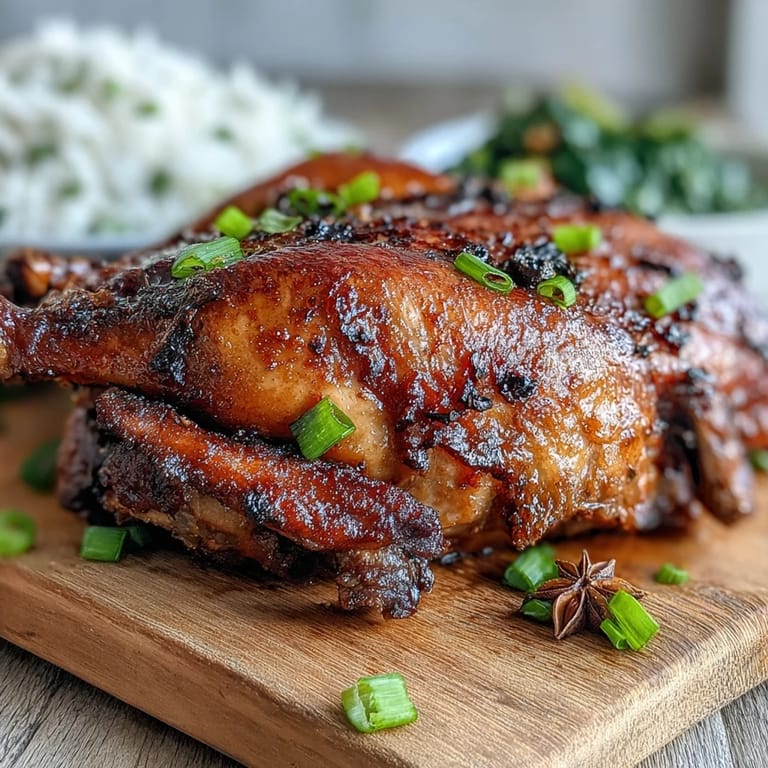
I made this for Valentine's Day once, mostly because I wanted to try something that felt special without being predictable. My partner walked in during the final roast, when the skin was just starting to crackle and turn that deep mahogany, and the look on their face made me realize I'd accidentally created a new tradition. We ate by candlelight with jasmine rice and too much wine, tearing into the crispy skin with our fingers like nobody was watching. Some recipes earn their place not because they're easy, but because they turn an ordinary evening into a memory you keep replaying.
Ingredients
- Whole duck: Look for one that's about 1.5 to 2 kg, cleaned and as dry as you can get it, because moisture is the enemy of crispy skin.
- Chinese five-spice powder: This blend of star anise, cloves, cinnamon, Sichuan pepper, and fennel is the soul of the dish, so buy a fresh jar if yours has been sitting around for years.
- Sea salt: Coarse salt draws out moisture from the skin and seasons deeply without making things taste flat.
- Light soy sauce: Adds savory depth and a touch of umami, just make sure it's gluten-free if that matters to you.
- Dark soy sauce: This is what gives the duck that gorgeous burnished color and a hint of molasses sweetness.
- Honey: It caramelizes during roasting and balances the salty and spicy notes with a gentle sweetness.
- Shaoxing wine: A Chinese cooking wine that tenderizes and adds complexity, though dry sherry works in a pinch.
- Garlic and ginger: Freshly minced and grated, they bring sharpness and warmth that mellows into something almost sweet as they cook.
- Orange: Both the zest and juice cut through the richness of the duck and add a bright, fragrant note that feels almost festive.
- Spring onions and star anise: Stuffed into the cavity, they perfume the meat from the inside out and make your kitchen smell like a dream.
Tired of Takeout? 🥡
Get 10 meals you can make faster than delivery arrives. Seriously.
One email. No spam. Unsubscribe anytime.
Instructions
- Mix the marinade:
- Whisk together the five-spice powder, salt, both soy sauces, honey, Shaoxing wine, garlic, ginger, orange zest, and juice until it looks glossy and smells like heaven. This is your flavor foundation, so taste it and adjust if you want more sweetness or salt.
- Prep the duck:
- Set the duck on a rack in your roasting pan and prick the skin all over with a fork, being careful not to stab into the meat itself. Those little holes let the fat render out and the marinade seep in.
- Marinate:
- Rub that marinade all over the outside and inside of the duck like you're giving it a spa treatment, then stuff the cavity with orange quarters, spring onions, and star anise. Let it sit uncovered in the fridge for at least an hour, though overnight is even better if you can wait.
- Roast low and slow:
- Preheat your oven to 180°C (350°F), place the duck breast-side up, and roast for an hour, basting with the pan juices every 30 minutes. This slow cook renders the fat and keeps the meat tender.
- Crisp the skin:
- Crank the heat up to 220°C (425°F) and roast for another 20 to 30 minutes until the skin turns crisp and golden brown, almost crackling. Watch it closely during this stage because it can go from perfect to burnt quickly.
- Rest and carve:
- Pull the duck out and let it rest for 10 minutes so the juices redistribute. Carve it with a sharp knife and serve with steamed jasmine rice and whatever greens you like.
 Pin It
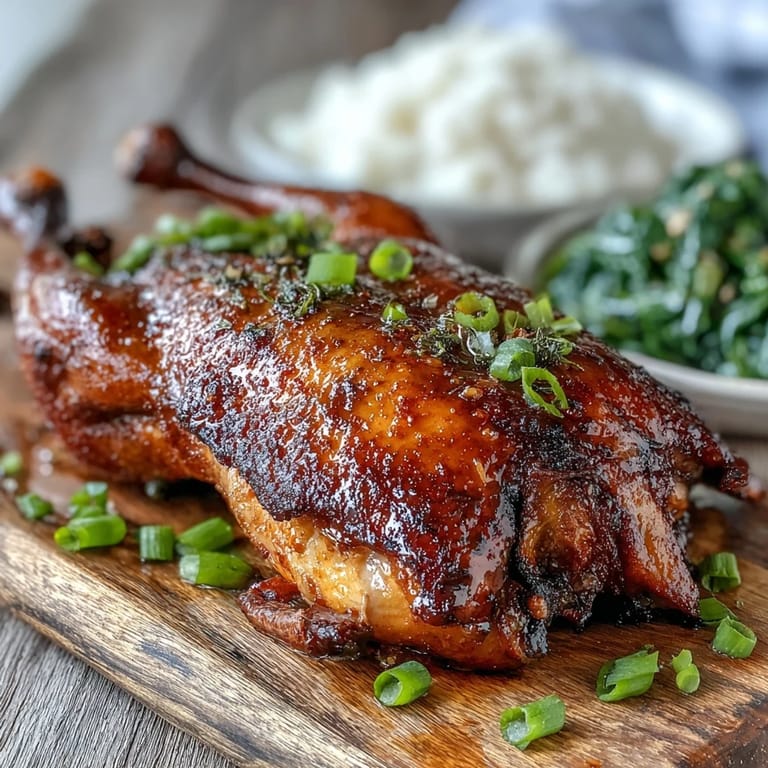
 The first time I served this to friends, one of them actually stopped mid-conversation to ask what I'd done to make it taste like this. I didn't have a fancy answer, just time and good spice and a willingness to let the oven do the work. We ended up sitting around the table for hours, picking at the bones and talking about everything and nothing, the kind of night that reminds you why cooking for people matters. That duck didn't just feed us, it gave us space to slow down and be together.
Getting the Crispiest Skin
Crispy duck skin is all about removing moisture and rendering fat slowly before hitting it with high heat. After marinating, pat the skin dry again with paper towels and let it air-dry in the fridge, uncovered, for as long as you can manage. When you roast, start low so the fat melts away without burning, then finish high to blister and crisp the skin. Don't cover the duck or let it steam, and resist the urge to open the oven door constantly because you'll lose precious heat.
Flavor Variations Worth Trying
If you want to change things up, swap the honey for maple syrup to add a subtle woodsy sweetness, or try a spoonful of hoisin sauce in the marinade for extra depth. I've added a splash of rice vinegar when I wanted more tang, and once I used blood orange instead of regular and the color was stunning. You can also tuck in a few slices of fresh chili if you like heat, or a cinnamon stick alongside the star anise for a warmer, spicier note.
Serving and Storing
Serve this duck with steamed jasmine rice to soak up the rich pan juices, and add a side of stir-fried bok choy or green beans for balance. If you have leftovers, shred the meat and tuck it into wraps with hoisin, cucumber, and spring onions for an incredible next-day lunch. The rendered fat in the pan is liquid gold, save it in a jar in the fridge and use it to roast potatoes or fry eggs.
- Let the duck rest before carving or all those beautiful juices will run out onto the board.
- Store leftovers in an airtight container in the fridge for up to three days.
- Reheat gently in a low oven to keep the skin from going rubbery.
 Pin It
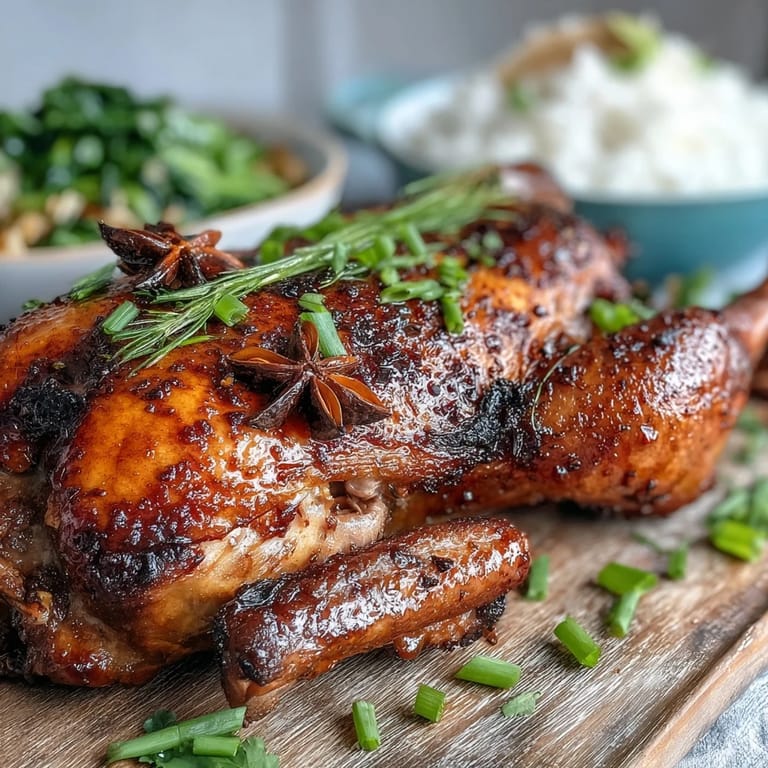
 This recipe turns a special occasion into something unforgettable, and it's forgiving enough that even your mistakes will probably still taste incredible. Make it once and you'll find yourself coming back to it whenever you want to impress someone, including yourself.
Recipe Q&A
- → Can I prepare the duck ahead of time?
Yes, marinating the duck overnight in the refrigerator enhances the flavor significantly. Leaving it uncovered also helps dry the skin for extra crispiness when roasted.
- → What if I don't have Shaoxing wine?
Dry sherry makes an excellent substitute for Shaoxing wine. You can also use mirin or even a dry white wine in a pinch.
- → How do I know when the duck is fully cooked?
The duck is done when the skin is crispy and golden brown, and the internal temperature reaches 75°C (165°F) in the thickest part of the thigh. The juices should run clear when pierced.
- → Why do I need to prick the skin?
Pricking the skin allows the fat to render out during roasting, resulting in crispier skin. Be careful to only pierce the skin and fat layer, not the meat itself.
- → What sides pair well with this dish?
Steamed jasmine rice, stir-fried bok choy, Chinese broccoli, or roasted vegetables complement the rich, aromatic duck beautifully. A light cucumber salad also provides refreshing contrast.
- → Can I use duck portions instead of a whole duck?
Absolutely. Duck breasts or leg quarters work well with this marinade. Adjust the cooking time accordingly—breasts typically need 20-25 minutes, while legs require 45-60 minutes.