 Pin It
 The first time I really understood schnitzel wasn't in a restaurant—it was in my aunt's kitchen on a rainy Sunday afternoon, watching her pound chicken breasts so thin they were nearly translucent. The rhythm of the mallet against the cutting board became almost meditative, and when that golden crust hit the hot oil, the sound was unmistakable. That's when I realized schnitzel isn't complicated; it's just meat, breading, and confidence. Now whenever I make it, I think about how she'd taste it, nod once, and say nothing else needed to happen to it.
I made schnitzel for a dinner party once where someone asked if I'd trained as a chef, and I nearly laughed into my wine glass. The truth is, the technique is so straightforward that the meat does half the work for you—you're just giving it permission to be delicious. That question stayed with me though, because it showed me that simple food cooked with attention looks effortless from the outside.
Ingredients
- Pork chops or chicken breasts (4, about 150g each): Pound these until they're thin and even—this is where the magic starts, because thinner meat means faster cooking and better crust-to-meat ratio.
- All-purpose flour (100g): This is your first line of defense against the egg mixture, creating the base that helps everything stick.
- Eggs (2 large) and milk (2 tbsp): The glue between flour and breadcrumbs—don't skip the milk, it loosens the egg and helps the coating cling.
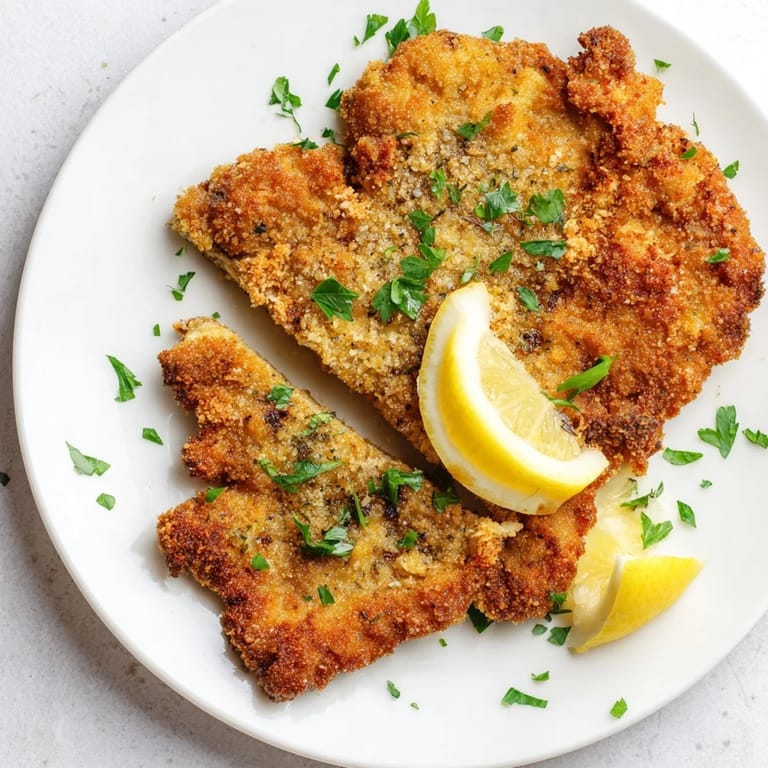
- Fine dry breadcrumbs (150g): Use fine breadcrumbs, not panko; they'll give you a delicate, even crust that shatters when you bite it.
- Vegetable oil or clarified butter (120ml): Clarified butter tastes more authentic and won't brown as quickly, but either works—just make sure it's hot enough.
- Salt, pepper, lemon wedges, and parsley: Lemon is non-negotiable; it cuts through the richness and wakes up every bite.
Tired of Takeout? 🥡
Get 10 meals you can make faster than delivery arrives. Seriously.
One email. No spam. Unsubscribe anytime.
Instructions
- Pound the meat to an even thickness:
- Place each cutlet between two sheets of plastic wrap and pound with steady, confident strokes until it's about 1/4 inch thick. This takes maybe two minutes per cutlet, and uneven pieces will cook unevenly.
- Season generously:
- Both sides get salt and pepper now—don't hold back, because the breading will mute some of this flavor.
- Set up your breading station:
- Three shallow plates in a row: flour, then egg mixture (whisk the eggs with milk until loose), then breadcrumbs. This assembly-line approach keeps your fingers cleaner and faster.
- Coat each cutlet carefully:
- Dredge in flour, shake off the excess, dip in egg, and coat with breadcrumbs—then press very gently so the crumbs stick but don't compress into a thick shell. A light touch here makes all the difference.
- Heat your oil properly:
- You'll know the oil is ready when a breadcrumb dropped in sizzles immediately and turns golden in seconds. This takes a few minutes on medium-high heat.
- Fry until golden and cooked through:
- Add the cutlets carefully (they'll splatter slightly) and fry 2 to 3 minutes per side until the crust is deep golden and the meat is cooked through. Don't crowd the pan—work in batches if needed.
- Drain briefly:
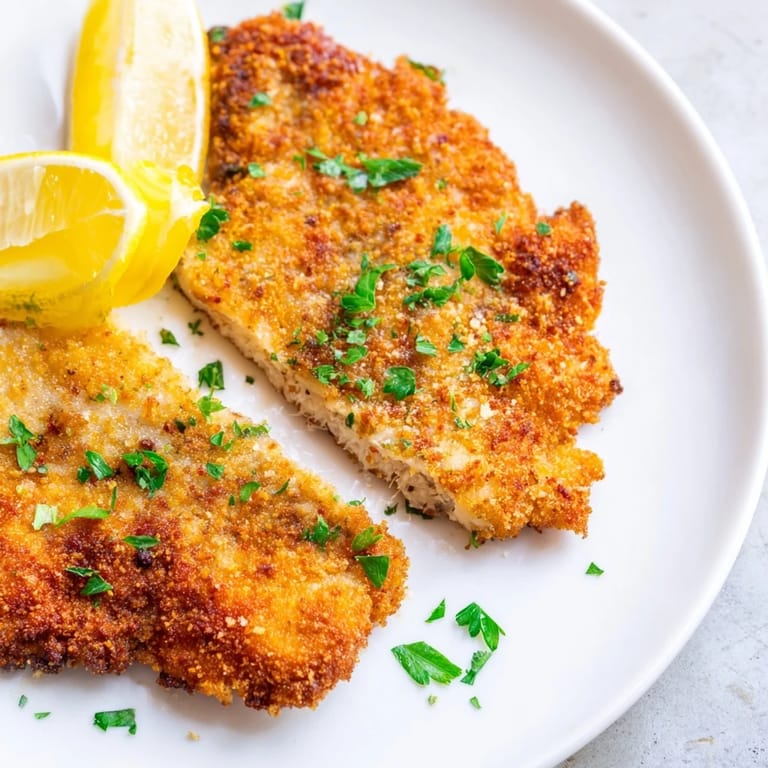
- Lay them on paper towels for just a minute to shed excess oil, then serve immediately with lemon wedges.
 Pin It
 There's a moment, maybe halfway through cooking, when someone walks into the kitchen and stops because of the smell—that toasted butter and golden crust aroma that fills a room. That's when you know you're doing something right, and it's also when you realize schnitzel isn't just dinner, it's an announcement.
The Secret to That Perfect Crust
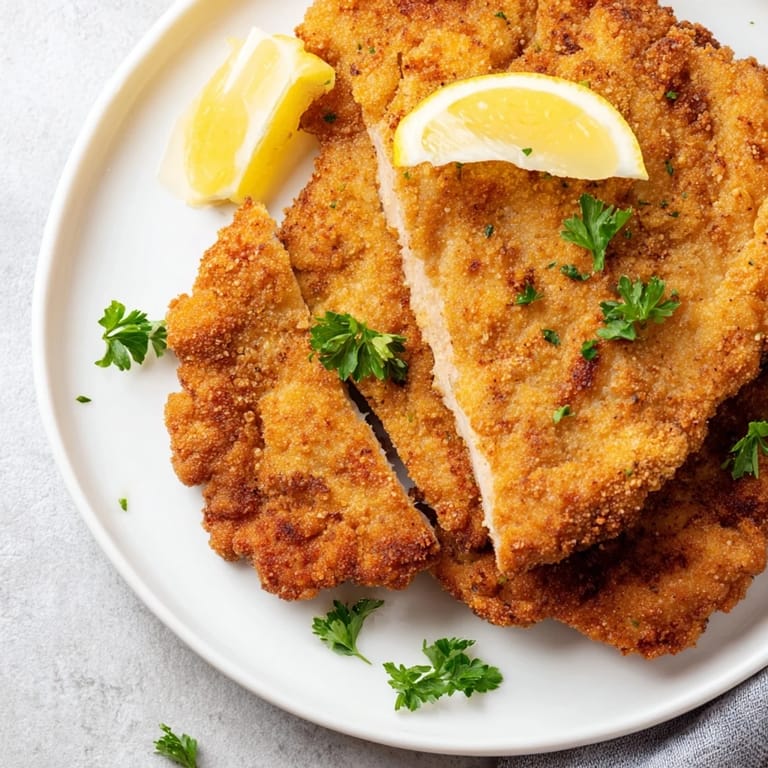
The difference between a mediocre schnitzel and a show-stopping one comes down to oil temperature and patience. Too cool, and the meat absorbs oil instead of crisping up. Too hot, and the crust burns before the meat cooks through. I learned this by making schnitzel at different temperatures and tasting the difference—the sweet spot is when the oil moves like water in the pan but starts smoking just slightly at the edges. Also, never crowd the pan; each cutlet needs space to fry evenly.
What to Serve Alongside
Schnitzel is humble enough to let other dishes shine, which is why it pairs beautifully with so many sides. In Germany, you'll find it with potato salad (warm or cold), crispy fries, or a simple cucumber salad that cuts through the richness of the fried coating. I often make a quick lemon butter sauce on the side, or sometimes just good mustard and fresh bread, because schnitzel is already doing the heavy lifting. The key is letting the crust stay crispy—avoid heavy, wet sauces that will soften it.
Timing and Make-Ahead Tips
You can pound the meat and set up your breading station an hour or two ahead, which takes pressure off when guests are arriving. However, once the cutlets are breaded, fry them right away or refrigerate them for no more than an hour—wet breading gets soggy. If you do need to make them ahead, fry them and reheat gently in a 300°F oven for about five minutes to restore crispness, though fresh from the pan is always better.
- Prep your sides first so the schnitzel gets your full attention when it hits the oil.
- Have paper towels ready and your serving plate warming so everything stays hot and crispy.
- If making for a crowd, you can fry the first batch and keep it warm in a 200°F oven while you cook the rest.
 Pin It
 Schnitzel reminds me that the best food doesn't need to be complicated—it just needs to be done with care and eaten with people you like. Serve it hot, squeeze lemon over it, and watch how quickly the plate gets cleaned.
Recipe Q&A
- → How do I ensure a crispy coating on the cutlets?
Use fine dry breadcrumbs and avoid pressing them too firmly onto the meat to keep the coating light and crispy after frying.
- → Can I use chicken instead of pork?
Yes, both boneless chicken breasts and pork chops work well when pounded thin and breaded properly.
- → What type of fat is best for frying?
Vegetable oil or clarified butter (Butterschmalz) are ideal for achieving a golden crust without burning.
- → How thick should I pound the meat?
Flatten the meat to about 1/4 inch (6 mm) thickness for even cooking and tender texture.
- → What side dishes complement this dish?
Traditional sides include potato salad, cucumber salad, or fries, enhancing the savory flavors of the cutlet.
- → Is it important to season the meat before breading?
Absolutely, seasoning both sides of the meat with salt and pepper before breading enhances the overall flavor.