 Pin It
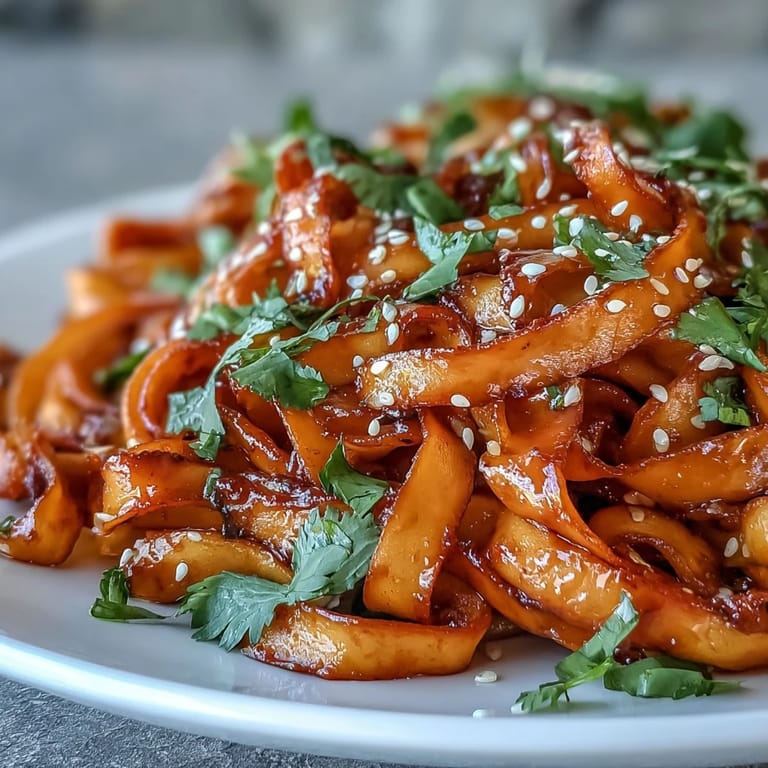
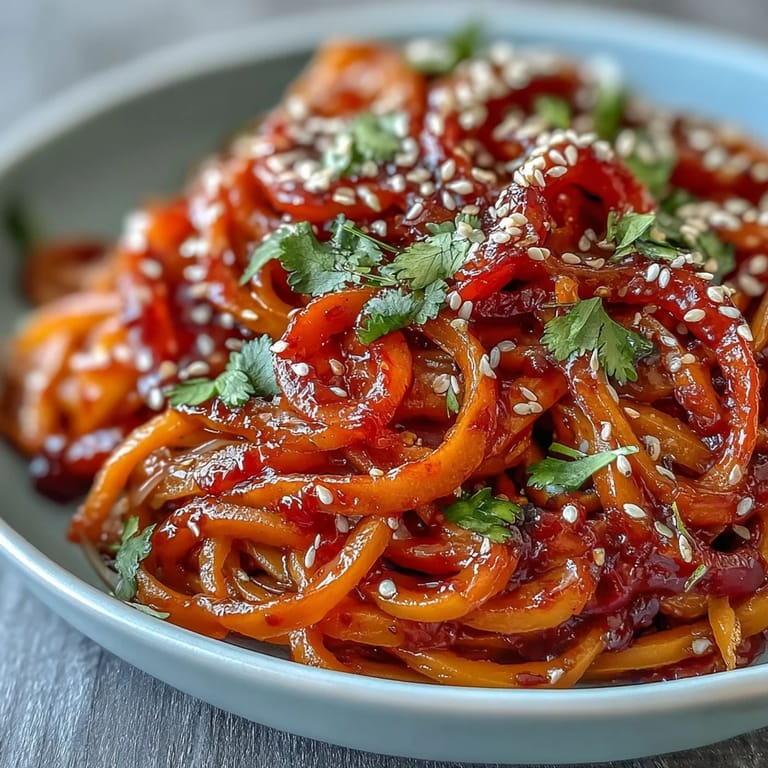
 The swede sat in my vegetable drawer for three weeks before I finally gave in. I'd bought it on a whim at the farmers market, charmed by its purple crown and hefty weight, but had no idea what to do with it beyond mashing it into oblivion. Then I remembered a noodle dish I'd had at a tiny fusion spot in Manchester, where they spiralized everything that wouldn't fight back. I grabbed my peeler and started making ribbons, thinking if it worked for courgettes, why not swede?
I made this for a friend who claimed she hated swede after years of watery school dinners. She took one bite, paused, and asked what the orange ribbons were. When I told her, she laughed and said it didn't count because it actually tasted good. Now she requests it every time she comes over, and I've stopped correcting her when she calls it the not-swede noodles.
Ingredients
- Swede (rutabaga): Choose one that feels heavy for its size and has smooth skin, the ribbons roast up with crispy edges and a sweet, earthy center that's nothing like boiled swede.
- Rice noodles: I use the flat kind, about 5mm wide, because they tangle beautifully with the ribbons and soak up the dressing without getting mushy.
- Gochujang: This fermented chili paste is the soul of the dish, bringing heat, sweetness, and deep umami all at once, and a little goes a long way.
- Maple syrup: It balances the heat and saltiness perfectly, though honey works too if that's what you have.
- Toasted sesame oil: Just a tablespoon adds a nutty richness that ties everything together, don't skip toasting those sesame seeds either.
- Spring onions: They add a sharp, fresh bite that cuts through the richness, I slice them thin and use both the white and green parts.
- Bean sprouts: Optional but lovely for crunch, I toss them in raw just before serving so they stay crisp.
Tired of Takeout? 🥡
Get 10 meals you can make faster than delivery arrives. Seriously.
One email. No spam. Unsubscribe anytime.
Instructions
- Get the oven blazing hot:
- Preheat to 220°C (425°F) so the swede ribbons caramelize quickly instead of steaming. A hot oven makes all the difference between limp and gloriously crispy edges.
- Prep and roast the swede:
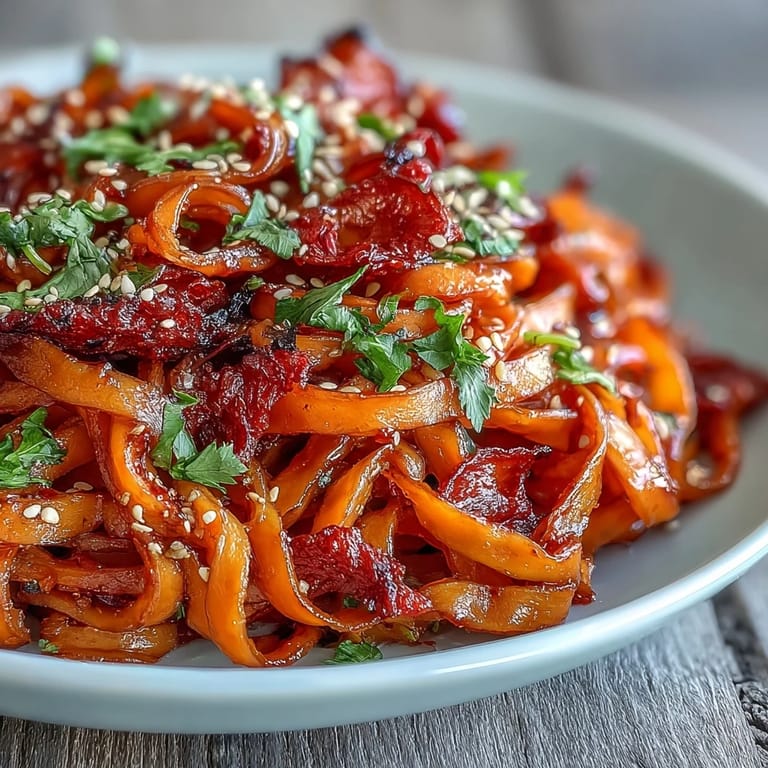
- Toss your ribbons with vegetable oil, salt, and pepper, then spread them out in a single layer on a baking sheet, don't crowd them or they'll steam. Roast for 25 to 30 minutes, flipping halfway through, until they're golden brown in spots and tender enough to twirl on a fork.
- Cook the noodles:
- While the swede roasts, boil your rice noodles according to the packet instructions, usually just a few minutes. Drain them, rinse under cold water to stop the cooking, and set aside so they don't clump.
- Make the magic dressing:
- In a bowl, whisk together gochujang, soy sauce, maple syrup, rice vinegar, sesame oil, grated garlic, ginger, and chili flakes if you like it fiery. Add a couple tablespoons of water to loosen it into a silky, pourable sauce.
- Toss everything together:
- In a large mixing bowl, combine the roasted swede, noodles, spring onions, carrot, and bean sprouts if using. Pour over the gochujang dressing and toss gently but thoroughly until every ribbon and noodle is coated in that glossy, spicy goodness.
- Serve it up:
- Pile into bowls and scatter over toasted sesame seeds and fresh cilantro. Serve immediately while the swede is still warm and the noodles are slippery.
 Pin It
 There's something about pulling this together on a cold Tuesday night that feels like a small victory. The kitchen smells like toasted sesame and roasted vegetables, the bowl is warm in your hands, and for a little while everything else can wait. It's the kind of meal that reminds you why you bother cooking at all.
Making It Your Own
I've added crispy pan-fried tofu when I needed more protein, and once I stirred through some edamame because that's what was in the freezer. A friend of mine tops hers with a fried egg and lets the yolk run into the noodles, which I'll admit is genius. You could also swap the swede for parsnips or even butternut squash if you're feeling adventurous, just keep the roasting time the same and watch for those golden edges.
Getting Ahead
This dish is brilliant for meal prep because the components hold up well separately. I roast the swede ribbons in the morning, make the dressing in a jar, and cook the noodles, then keep everything in the fridge until dinner. When I'm ready to eat, I just toss it all together cold or give it a quick warm-through in a hot pan. The flavors actually deepen after a few hours, and the swede soaks up even more of that spicy, sweet dressing.
Serving Suggestions
I usually serve this on its own because it's hearty enough to stand alone, but it's lovely alongside some crispy spring rolls or a simple cucumber salad dressed with rice vinegar and a pinch of sugar. If you're feeding a crowd, double the recipe and pile it onto a big platter, everyone can help themselves. A cold Riesling or a light lager works beautifully with the heat, though I've been known to reach for a ginger beer when I want something non-alcoholic.
- Top with extra chili flakes if you like your food properly spicy.
- Swap cilantro for Thai basil if you can find it, the anise notes are gorgeous here.
- Leftovers are excellent cold straight from the fridge the next day, no reheating needed.
 Pin It
 This is the recipe that taught me to stop overlooking the odd vegetables at the back of the shop. Give it a go, and you might just find yourself buying swede on purpose from now on.
Recipe Q&A
- → Can I substitute swede with another vegetable?
Yes, you can use butternut squash, sweet potato, or even zucchini ribbons. Adjust roasting time accordingly based on the vegetable's density and water content.
- → How spicy is this dish?
The heat level is moderate, coming primarily from the gochujang paste. You can adjust spiciness by reducing the gochujang or omitting the optional chili flakes for a milder version.
- → Can I make this ahead of time?
The roasted swede and dressing can be prepared up to 2 days in advance. Cook noodles fresh and toss everything together just before serving for best texture.
- → What can I use instead of gochujang?
Try sriracha mixed with a little tomato paste and sugar, or use another chili paste like sambal oelek with added sweetness. The flavor profile will differ but remain delicious.
- → How do I make thin swede ribbons?
Use a vegetable peeler for wide ribbons or a mandoline slicer for uniform julienne strips. A sharp knife works too, though it requires more precision and time.
- → Is this dish gluten-free?
It can be made gluten-free by using tamari instead of soy sauce and checking that your gochujang is certified gluten-free, as some brands contain wheat or barley.