 Pin It
 My grandmother's kitchen in Vilnius smelled like potato starch and woodsmoke on the mornings she made cepelinai. She'd wake before dawn, her hands moving through the grating and squeezing with a rhythm that seemed to match the rhythm of her stories. The first time I watched her shape those dumplings, I understood they weren't just food—they were the geography of her childhood pressed into oval form, each one a small act of remembering. Now when I make them, my own kitchen fills with that same smell, and somehow the same stories feel truer.
I made these for a dinner party last winter when snow was still piled against the windows, and my Polish friend took one bite and went quiet in a way that made me nervous. Then she asked for the recipe, and I realized she was tasting something that reminded her of her own grandmother's kitchen—a different recipe, a different language, but the same love. That's when I knew cepelinai wasn't just Lithuanian; it was a taste that traveled.
Ingredients
- Starchy potatoes (1.5 kg raw, peeled): Yukon Gold or similar starchy varieties matter here because they'll absorb less water and give you a dough that holds together instead of spreading into soup.
- Boiled mashed potatoes (2 medium): These add structure and prevent the raw potato dough from being too wet—a trick that saves everything.
- Salt (1 tsp): Season the dough itself, not just the finished dumpling, or the inside will taste flat.
- Potato starch (1 tbsp optional): If you squeeze the potatoes hard enough, you might not need this, but having it on hand is like having a backup plan.
- Ground pork (250 g) and ground beef (150 g): The combination gives you more flavor than either meat alone—pork brings richness, beef brings depth.
- Onion and garlic (1 small onion, 1 clove): Mince them fine so they cook into the meat rather than announcing themselves in every bite.
- Salt and pepper (1 tsp salt, ½ tsp black pepper): Don't underseasoned the filling; this is where your flavor lives.
- Bacon or smoked pork belly (150 g diced): Smoked pork belly tastes more authentic and melts into the cream in a way regular bacon doesn't quite achieve.
- Sour cream (300 ml): Full-fat sour cream, not the diet version—this sauce is supposed to be rich.
- Fresh dill (1 tbsp chopped, optional): Dill is the sound of Baltic cooking; don't skip it if you can help it.
Tired of Takeout? 🥡
Get 10 meals you can make faster than delivery arrives. Seriously.
One email. No spam. Unsubscribe anytime.
Instructions
- Grate and squeeze the potatoes like you mean it:
- Use the fine side of the grater and watch the potatoes turn into a wet, fragrant mess. Wrap them in cheesecloth or a clean kitchen towel and squeeze—harder than you think you should, until your hands ache and barely any liquid drips out. Let the reserved liquid sit in a bowl; the starch will settle at the bottom and you'll pour off the clear water on top, leaving behind a white paste that's the secret to binding everything together.
- Build the potato dough:
- Combine your squeezed raw potatoes, the mashed boiled potatoes, salt, and that reserved starch in a bowl. Mix with your hands until it's cohesive and smooth, adding a touch more starch only if it still feels too wet. The dough should hold together when you press it, not crumble.
- Season the meat filling:
- Mix pork, beef, chopped onion, minced garlic, salt, and pepper in a separate bowl until everything is distributed evenly. Don't overmix—just combine until you can't see streaks of meat color anymore.
- Shape the dumplings with wet hands:
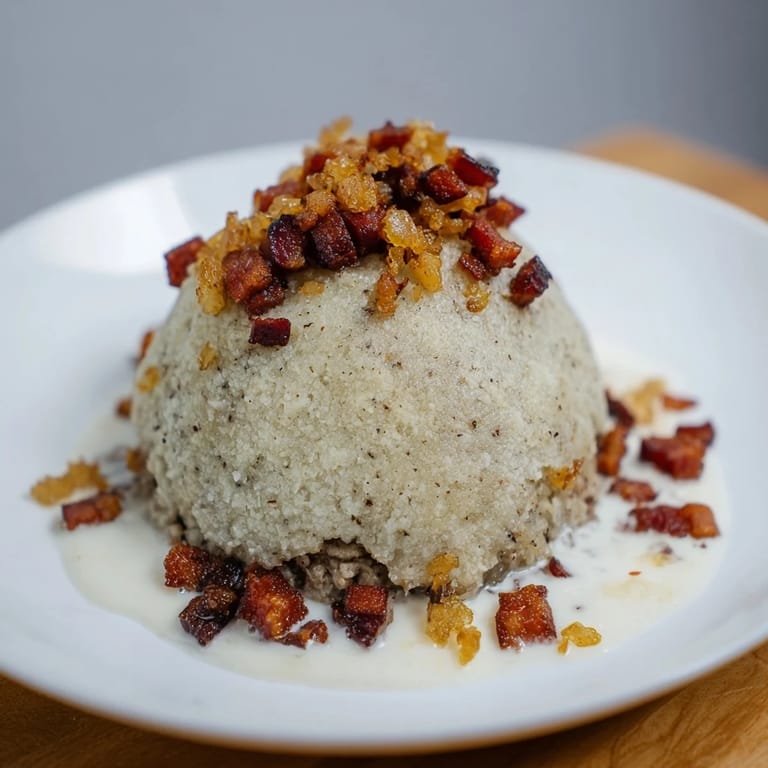
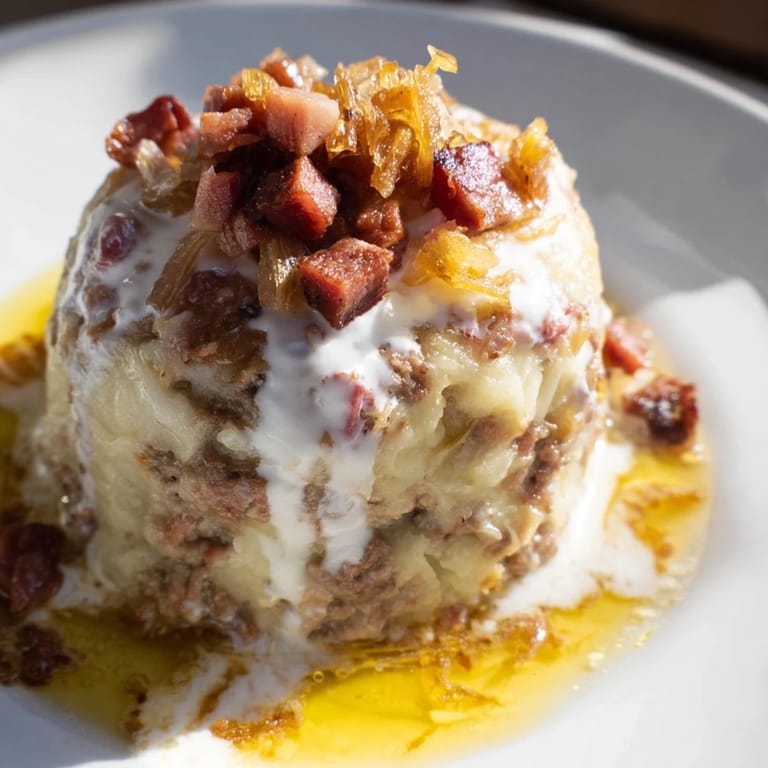
- Wet your hands so the dough doesn't stick, then take a portion about the size of a large egg. Flatten it into a thin patty in your palm, place a heaping tablespoon of meat in the center, and fold the edges up and over, sealing completely so no meat peeks through. The shape should be oval, like a pointed egg, and it should feel smooth in your hand.
- Cook in gentle, simmering water:
- Bring a large pot of salted water to a simmer—not a rolling boil, which will tear the dumplings apart. Slide them in carefully in batches and they'll sink at first, then float after 15–20 minutes. Once they float, give them another 5–10 minutes and they'll feel firm when you press one gently with the back of a spoon. Don't crowd the pot.
- Make the sauce while dumplings cook:
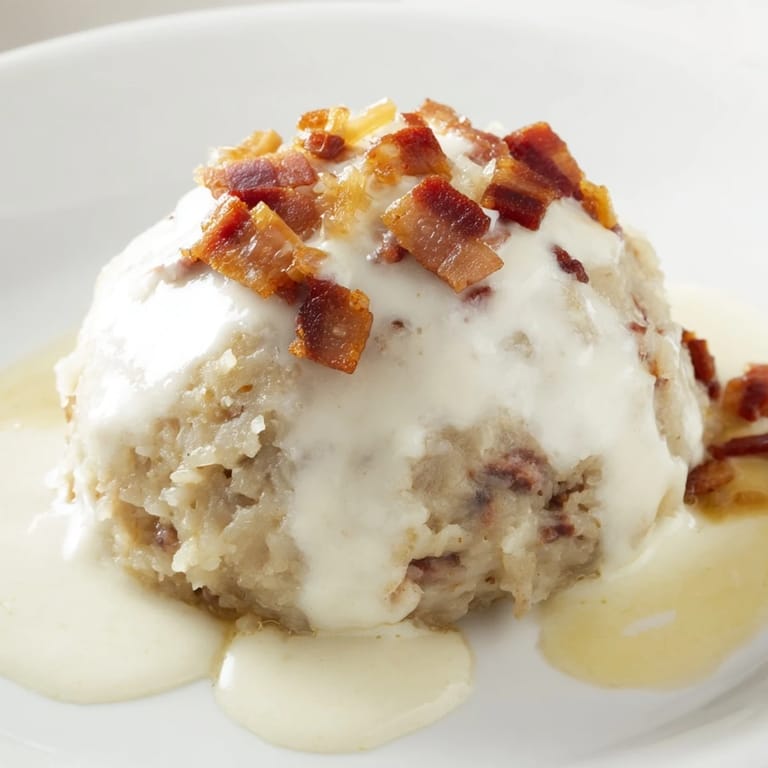
- Fry the diced bacon in a skillet over medium heat until it's crisp and the fat has rendered. Add chopped onion to the bacon fat and let it turn golden and soft. Pour in the sour cream and fresh dill, stir gently, and let it warm through without boiling—boiling will make the cream separate and look broken.
- Serve immediately:
- Transfer the hot dumplings to a platter, pour the warm sauce over the top, and eat them while they're still steaming. They cool quickly and become dense, so timing is everything.
 Pin It
 There's a moment when you slide the first batch of cepelinai into the simmering water and they disappear beneath the surface, and you think for a split second that you've made a terrible mistake. Then they float back up, one by one, like they're being called to the surface by something you can't see, and you know you've done it right. That moment—that small, private victory—is when cepelinai stops being a recipe and becomes proof that you've learned something true.
The Potato Question
The choice between all raw potato dough or a mixture of raw and boiled matters more than most recipes let on. Raw potato alone will be wetter and harder to shape, but mixing in boiled potato gives you structure without adding flour or starch you didn't grow yourself. The boiled potato also makes the finished dumpling taste less starchy and more tender—it's the difference between dense and delicate. If you have access to very fresh, new-season potatoes, you can use less boiled potato, but if your potatoes have been sitting in storage all winter, use the full amount.
Why Sour Cream and Bacon Matter
The sauce isn't just a topping; it's the emotional center of the dish. Sour cream has a sharpness that cuts through the potato richness, and bacon brings smoke and salt that make you want another bite immediately. Some families serve these with just melted butter, or butter and dill, and that's perfectly honest cooking. But the sour cream and bacon sauce is what turned cepelinai into something people remember, something they ask for by name years later. Once you taste the two together, the potato inside becomes almost secondary to the experience of that sauce.
Variations and Timing
You can fill these with all pork if beef is hard to find, or all beef if pork feels too heavy for your taste. For a vegetarian version that actually works, sauté finely chopped mushrooms and caramelized onions with garlic until the moisture evaporates, then season generously with salt, pepper, and a touch of smoked paprika if you want to hint at the missing meat.
- The dumplings can be shaped hours ahead and frozen on a baking sheet, then cooked directly from frozen (just add 5–10 extra minutes of cooking time).
- Leftover cepelinai can be reheated by pan-frying them in butter until the outside is golden and crispy, which honestly tastes even better than the first time.
- If you have a food mill instead of a grater, use the finest disk to grate the potatoes—it's less work on your hands and produces similar results.
 Pin It
 Make cepelinai for people you want to feed well, people you want to sit with for a long time. They deserve the care these dumplings demand.
Recipe Q&A
- → How do you prepare the potato dough for Cepelinai?
Grate raw starchy potatoes and squeeze out excess moisture. Combine this with mashed boiled potatoes, salt, and reserved potato starch to form a cohesive dough perfect for shaping.
- → What meat is used for the filling?
The filling combines ground pork and beef seasoned with onion, garlic, salt, and black pepper to create a balanced savory taste.
- → How are the dumplings cooked?
Carefully simmer the formed dumplings in salted water without boiling, cooking them until they float and feel firm, typically 25-30 minutes.
- → What ingredients are in the sauce served with Cepelinai?
The sauce consists of diced bacon fried to crispness, sautéed onions, creamy sour cream, and a touch of fresh dill for enhanced aroma.
- → Can the filling be adapted for dietary preferences?
Yes, a vegetarian variant can be made by replacing meat with sautéed mushrooms and onions while maintaining the traditional potato dough.