 Pin It
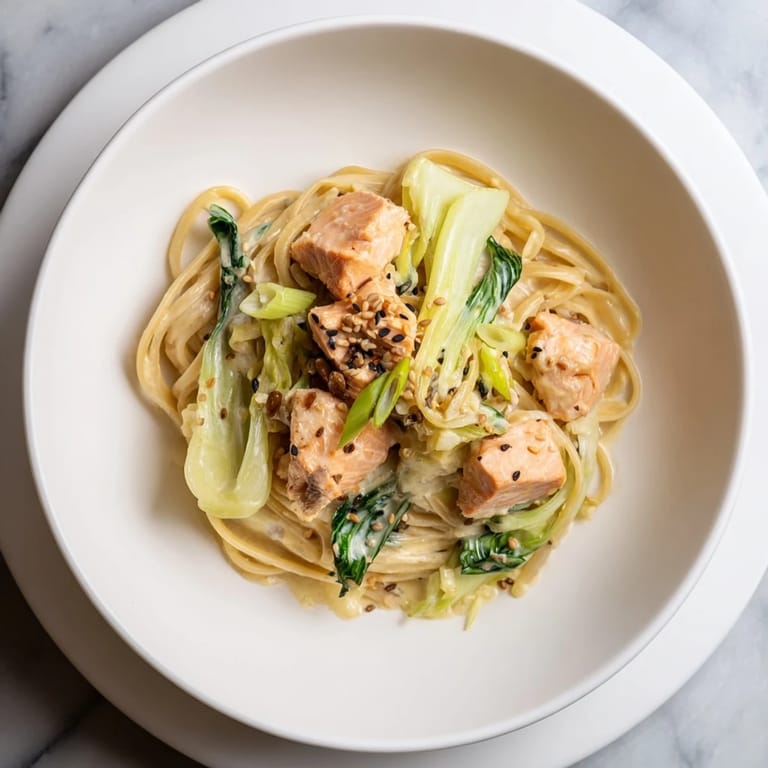
 I discovered this dish on an evening when my partner came home asking for something that felt both comforting and special, but without the fuss. I had salmon in the fridge, pasta on the shelf, and a jar of white miso that had been waiting for the right moment. That night, the kitchen filled with the most unexpected combination of aromas—garlic meeting umami, butter melting into cream, sesame oil catching the heat just right. By the time I plated it, I knew I'd stumbled onto something I'd make again and again.
The first time I made this for friends, I was nervous about the miso-pasta combination—would they think it was too weird? But watching their faces when they took that first bite, seeing them pause mid-chew as the umami hit, made me realize this was one of those dishes that sounds adventurous but tastes instantly familiar. One guest asked for the recipe before dessert arrived.
Ingredients
- Salmon fillets (400 g): Cut into bite-sized pieces so they cook gently and stay tender—this matters more than you'd think, as uniform pieces cook evenly.
- Linguine or spaghetti (300 g): The strands catch the creamy sauce beautifully, though any pasta shape works if you have a preference.
- Baby bok choy (2 heads): Chopped roughly; it wilts into the sauce and adds a slight sweetness that balances the savory miso.
- Garlic (2 cloves): Minced finely so it melts into the oil and releases its fragrance without overpowering anything.
- Scallions (2): Sliced thin for garnish, adding a fresh bite at the end.
- Unsalted butter (60 g): Use real butter here—it's a key player, not a supporting role, so quality matters.
- White miso paste (2 tbsp): This is where the magic lives; it adds savory depth without tasting fishy or heavy.
- Soy sauce (2 tbsp): Brings saltiness and more umami that layers beautifully with the miso.
- Mirin (2 tbsp): A touch of sweetness that rounds out all the savory notes—don't skip it.
- Heavy cream (100 ml): Creates a silky sauce that hugs the pasta and salmon perfectly.
- Sesame oil (1 tsp): A small amount goes a long way; it's aromatic and adds toasted depth.
- Black pepper (½ tsp): Freshly ground makes all the difference in brightness.
- Toasted sesame seeds (1 tbsp, optional): A final garnish that adds crunch and visual warmth.
- Lemon wedges: A squeeze cuts through the richness and wakes up your palate with each bite.
Tired of Takeout? 🥡
Get 10 meals you can make faster than delivery arrives. Seriously.
One email. No spam. Unsubscribe anytime.
Instructions
- Get your water boiling and pasta going:
- Fill a large pot with salted water and bring it to a rolling boil—the water should taste like the sea. Add pasta and cook to al dente, which means it has a slight firmness when you bite it, then reserve ½ cup of that starchy pasta water before draining.
- Warm your pan and toast the garlic:
- Heat 1 tablespoon of butter with the sesame oil in your skillet over medium heat until it shimmers and smells toasty. Add minced garlic and let it cook for about a minute until fragrant—you'll notice the kitchen fill with that warm, welcoming aroma.
- Cook the salmon gently:
- Add your salmon pieces to the hot pan, resisting the urge to move them around too much. Let them cook undisturbed for 2–3 minutes per side until the flesh turns opaque and flakes easily—they'll still be slightly buttery inside. Scoop them out onto a plate.
- Build the miso butter sauce:
- Melt the remaining butter in the same skillet, then whisk in the miso paste, soy sauce, and mirin until smooth—take your time here so the miso dissolves fully without lumps. Watch it transform into a glossy, complex-smelling sauce.
- Add cream and vegetables:
- Pour in the heavy cream and black pepper, stir until everything blends into a luxurious base. Add your chopped bok choy and let it wilt for 2–3 minutes, softening into the sauce while keeping a hint of its texture.
- Bring it all together:
- Return the cooked salmon to the skillet and gently toss to coat it in that silky sauce. Add your drained pasta and toss everything together, adding splashes of reserved pasta water as needed until the sauce clings to the noodles like a dream.
- Finish and serve:
- Divide between bowls and scatter scallions and toasted sesame seeds over the top. A squeeze of lemon adds the final bright note that ties everything together beautifully.
 Pin It
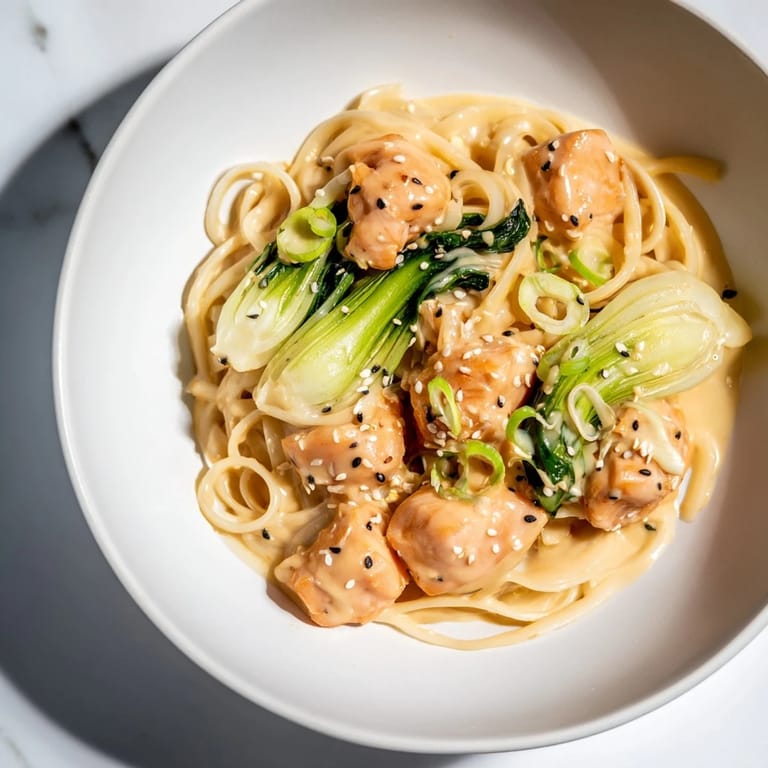
 There's a moment in this dish's cooking when all the separate elements—the sweet aroma of sesame oil, the umami depths of miso, the gentle whiteness of cream—suddenly become one thing. That's when you know it's going to be something worth making again.
The Magic of Miso in Pasta
I used to think miso belonged only in soups and dressings, until I discovered how it behaves in a cream sauce. The fermented depth doesn't shout—it whispers underneath, making everything taste richer and more interesting without anyone being able to pinpoint what that secret ingredient is. It's like the umami version of adding a pinch of espresso powder to brownies, except your guests won't need dessert to feel satisfied.
Why Salmon Works Here
Salmon has enough fat to stand up to the richness of the cream and butter, and its mild flavor lets the miso sauce be the star rather than competing with it. The gentle cooking method keeps the flesh tender and almost buttery, which matters more than using the fanciest cut. I've made this with less expensive salmon from the grocery store, and it was just as delicious as versions with pricier fish.
Make It Your Own
This recipe is forgiving, which is part of why I love it. You can swap the bok choy for spinach or even thin-sliced mushrooms if that's what you have on hand. A small pinch of chili flakes added early on brings gentle heat, and a splash of white wine in place of some pasta water adds complexity. Trust your instincts and remember that the best version is the one you actually make, not the one that exists perfectly in your head.
- If you find the sauce too thick, thin it with more pasta water one tablespoon at a time.
- Leftovers are wonderful cold the next day, almost like a creamy pasta salad.
- A crisp white wine like Sauvignon Blanc beside the bowl makes this feel like proper dinner.
 Pin It
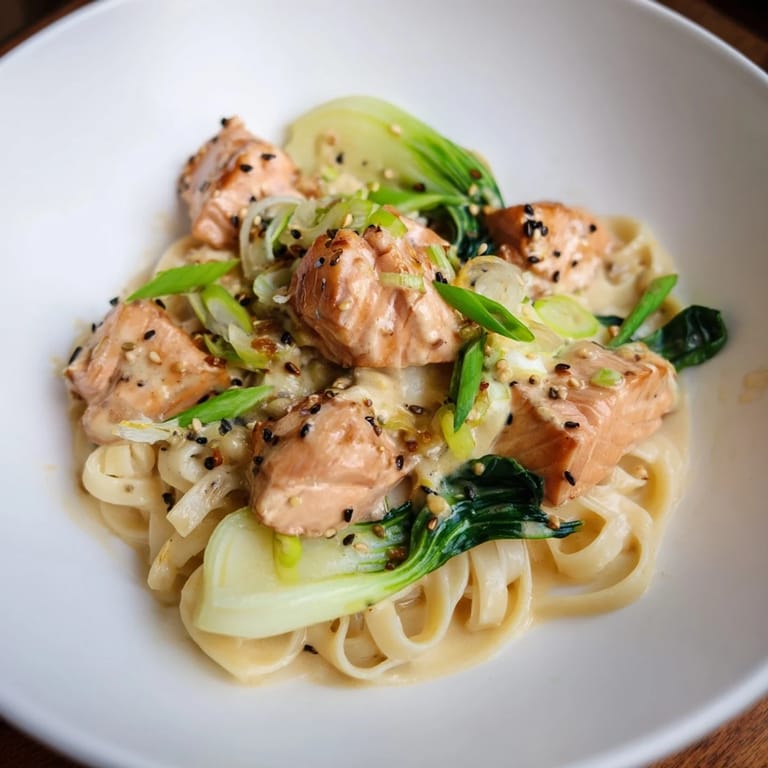
 This is the kind of dish that reminds you why cooking at home feels like an act of care. Serve it on your best bowls and let everyone gather around, because something this good deserves witnesses.
Recipe Q&A
- → How do I prevent the salmon from overcooking?
Cook salmon over medium heat for 2–3 minutes per side until just opaque. Remove promptly to retain moisture and tenderness.
- → Can I substitute baby bok choy with other greens?
Yes, spinach or swiss chard work well as alternatives, added toward the end to wilt gently without losing color.
- → What type of pasta works best?
Linguine or spaghetti are ideal for this dish, as they hold the creamy sauce and blend well with the salmon and vegetables.
- → How can I adjust the sauce thickness?
Reserving some pasta water to add gradually helps achieve a silky, smooth sauce consistency without thinning out flavors.
- → Are there any tips for boosting umami flavor?
Using white miso paste, soy sauce, and toasted sesame seeds enhances the savory depth while balancing the creamy butter and cream base.
- → Is this dish suitable for a pescatarian diet?
Yes, it contains fish and no meat, fitting well within pescatarian guidelines while offering a rich and balanced plate.