 Pin It
 A friend once told me that soup should smell like a garden after rain, and I laughed until I made this one on a gray Thursday afternoon. The lemongrass hit the hot pan and suddenly my kitchen smelled like a spa I couldn't afford. I stood there stirring onions, wondering why I'd never thought to combine spinach and coriander this way before. By the time the coconut milk went in, I was already texting photos to anyone who'd listen.
I served this to my sister during one of her I'm trying to eat better phases, and she had two bowls before asking for the recipe. She's not easily impressed, especially when it comes to anything green and healthy looking. Watching her scrape the bottom of her bowl with bread was better than any five star review. She still makes it every few weeks and sends me updates with slightly different garnishes, competing for my approval.
Ingredients
- Fresh spinach (200 g): Baby spinach works beautifully here, wilting down fast and keeping that jewel green color without any bitterness.
- Fresh coriander (1 large bunch): Don't skip the stems, they carry even more flavor than the leaves and blend into silky nothingness.
- Lemongrass (1 stalk): Peel away those tough outer layers until you reach the tender pale part, then slice it thin so it releases all that citrusy perfume.
- Onion (1 medium): Yellow or white onion both work, forming the sweet backbone that balances all the bright herby notes.
- Garlic (2 cloves): Mince it fine so it melts into the soup base and adds that warm, savory depth.
- Fresh ginger (2 cm piece): Grate it on the small holes of a box grater to get the juice and pulp without any stringy bits.
- Coconut milk (400 ml can, full fat): This is what makes the soup creamy and lush, the full fat version blends beautifully without splitting.
- Vegetable stock (750 ml): Homemade or store bought, just make sure it's not too salty since you'll be reducing the liquid slightly.
- Soy sauce or tamari (1 tbsp): Adds a quiet umami richness that makes the whole soup taste more complex than it actually is.
- Ground white pepper (1/2 tsp): It has a sharper, more floral heat than black pepper and doesn't leave dark specks in your beautiful green soup.
- Salt: Taste as you go, the soy sauce already brings some saltiness.
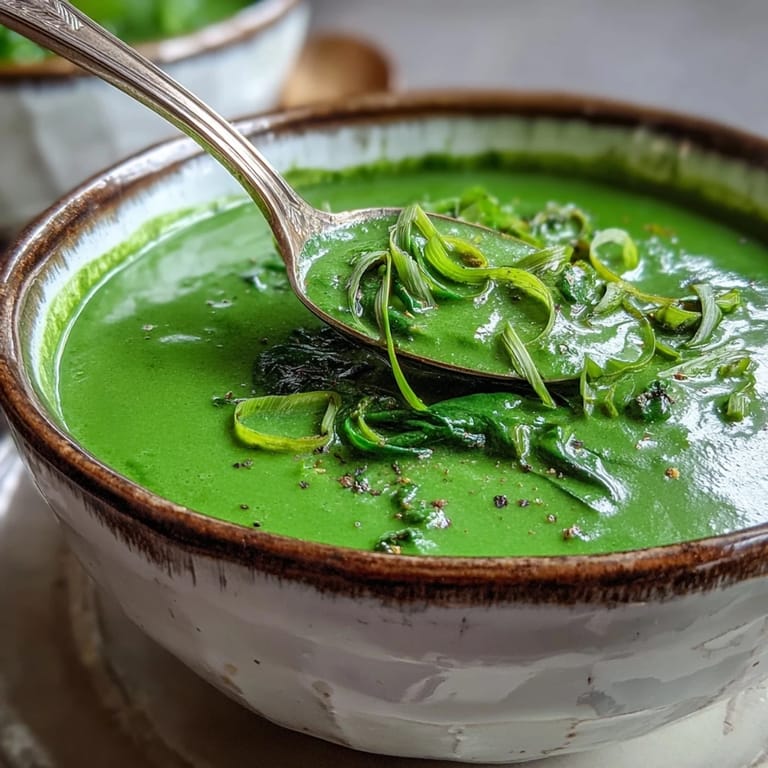
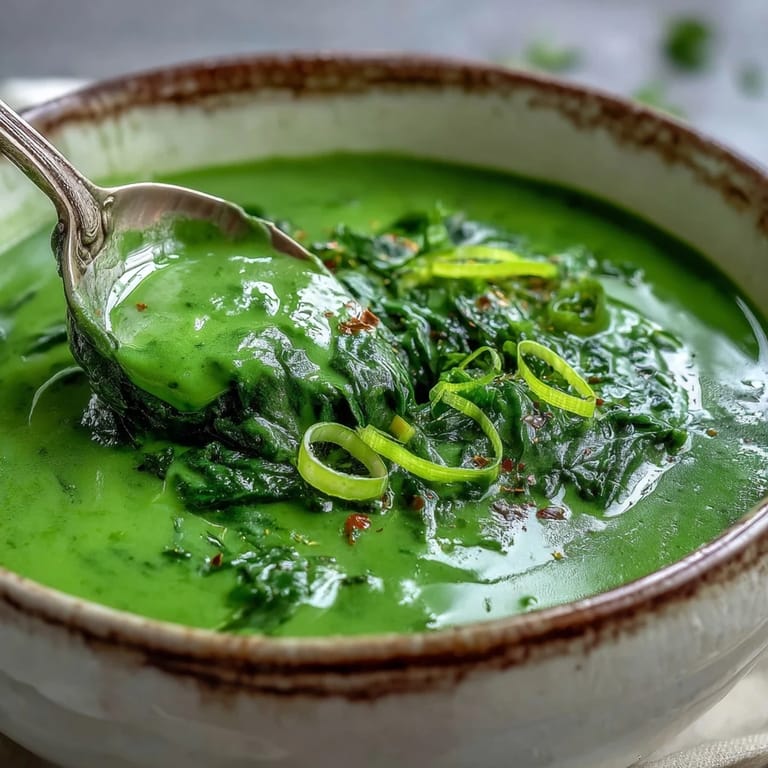
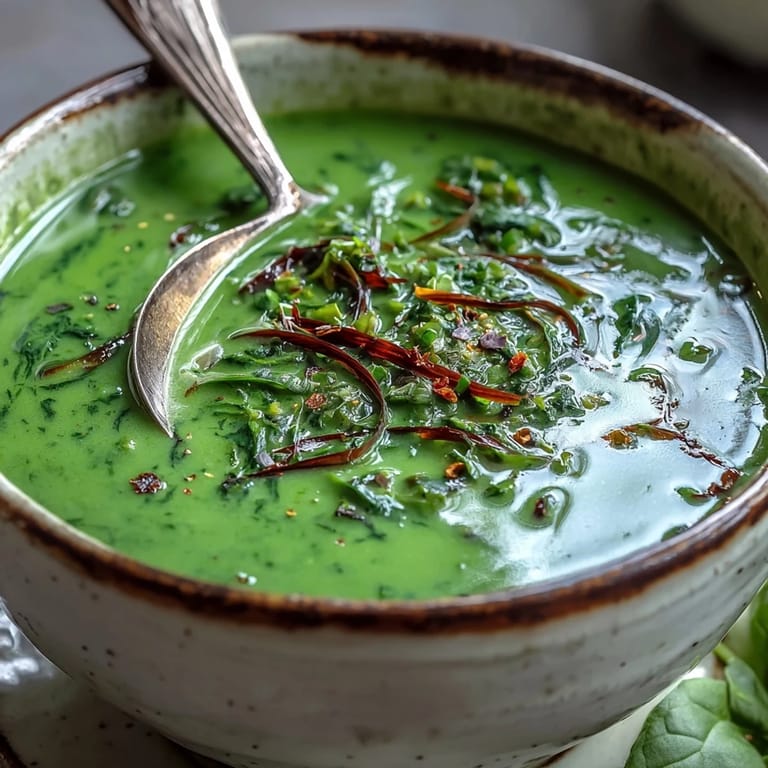
- Extra coriander leaves and sliced red chili (optional): A handful of fresh leaves and a few chili rings on top make it look like something from a café menu.
Tired of Takeout? 🥡
Get 10 meals you can make faster than delivery arrives. Seriously.
One email. No spam. Unsubscribe anytime.
Instructions
- Soften the onion:
- Heat your largest saucepan over medium heat with a glug of neutral oil, then add the chopped onion and let it cook gently until it turns soft and see through, about 3 minutes. You'll know it's ready when it smells sweet and has lost that sharp raw edge.
- Build the aromatics:
- Toss in the garlic, grated ginger, and sliced lemongrass, stirring constantly for 2 minutes so nothing sticks or burns. The kitchen will start smelling like a Thai restaurant, that's your cue.
- Wilt the greens:
- Add all your spinach and most of the coriander, saving just a small handful for garnish, and stir until everything collapses into the pan, about 2 minutes. It looks like a huge pile at first but shrinks down fast.
- Simmer with coconut and stock:
- Pour in the coconut milk and vegetable stock, then bring everything to a gentle boil before turning the heat down to a lazy simmer for 10 minutes. This lets the lemongrass infuse properly and all the flavors get friendly with each other.
- Blend until silky:
- Take the pot off the heat and use an immersion blender to puree everything until it's completely smooth and creamy, or carefully transfer it in batches to a countertop blender. If using a blender, leave the lid slightly vented so hot steam can escape safely.
- Season and finish:
- Return the blended soup to the pot, stir in the soy sauce, white pepper, and a pinch of salt, then let it simmer gently for another 2 minutes. Taste it now and adjust the seasoning, you might want a little more salt or pepper depending on your stock.
- Serve hot:
- Ladle the soup into bowls and scatter fresh coriander leaves and thin slices of red chili on top if you like a little heat and color. Serve it steaming hot with crusty bread or a side of jasmine rice.
 Pin It
 One evening I made this for a small dinner party, and a friend who claimed to hate cilantro asked for seconds without realizing what she was eating. When I told her later, she just shrugged and said maybe it's different when it's cooked like this. That small victory felt bigger than it should have, like I'd discovered a loophole in taste preferences. Now she asks me to make it every time she visits, and I pretend it's a huge inconvenience even though I love any excuse to make it again.
What to Serve It With
This soup plays well with crusty sourdough for dipping, but I've also served it alongside steamed jasmine rice when I wanted something more filling. A simple side salad with sesame dressing keeps the Asian inspired vibe going without overwhelming the delicate flavors. If you're feeling fancy, a few crispy wonton strips on top add a nice textural contrast that makes it feel more like a composed dish than just soup in a bowl.
Make It Your Own
I've swapped in kale when I didn't have spinach, though you'll want to simmer it a bit longer since it's tougher. A squeeze of lime juice right before serving wakes up all the flavors and adds a brightness that cuts through the coconut richness. For extra heat, I sometimes blend in a whole green chili with the greens, which gives a background warmth without making it aggressively spicy. One time I stirred in a spoonful of miso paste instead of soy sauce and it added this deep, savory layer that my partner still talks about.
Storage and Reheating
This soup keeps in the fridge for up to four days in an airtight container, though the color dulls slightly after the first day. Reheat it gently on the stove over low heat, stirring occasionally so the coconut milk doesn't separate. I don't recommend freezing it because coconut milk can get grainy when thawed, but if you must, blend it again after reheating to bring back the creamy texture.
- Store any leftover garnishes separately so they stay fresh and vibrant.
- If the soup thickens too much in the fridge, thin it with a splash of vegetable stock or coconut milk when reheating.
- Always taste and adjust seasoning after reheating, flavors can mellow overnight.
 Pin It
 Every time I make this, I'm reminded that good food doesn't have to be complicated or take all day. It just needs a few bright ingredients and enough confidence to let them speak for themselves.
Recipe Q&A
- → Can I use frozen spinach instead of fresh?
Yes, you can use frozen spinach. Use about 150g of frozen spinach and make sure to thaw and drain it well before adding to the soup to avoid excess water.
- → What can I substitute for lemongrass?
If lemongrass is unavailable, use 1-2 teaspoons of lemon zest plus a tablespoon of lemon juice. While the flavor won't be identical, it will provide a similar citrusy note.
- → How do I store leftover soup?
Store in an airtight container in the refrigerator for up to 3 days. Reheat gently on the stovetop, stirring occasionally. The soup can also be frozen for up to 2 months.
- → Can I make this soup without a blender?
While blending creates the signature creamy texture, you can chop all ingredients very finely and serve it as a chunky soup. The flavor will remain delicious, though the consistency will differ.
- → How can I make this soup more filling?
Add cooked rice noodles, tofu cubes, or chickpeas for extra protein and substance. You can also serve it alongside crusty bread or steamed jasmine rice for a more substantial meal.
- → Is lite coconut milk acceptable?
Lite coconut milk will work but will result in a thinner, less creamy soup. For best results, use full-fat coconut milk or mix lite coconut milk with a few tablespoons of coconut cream.