 Pin It
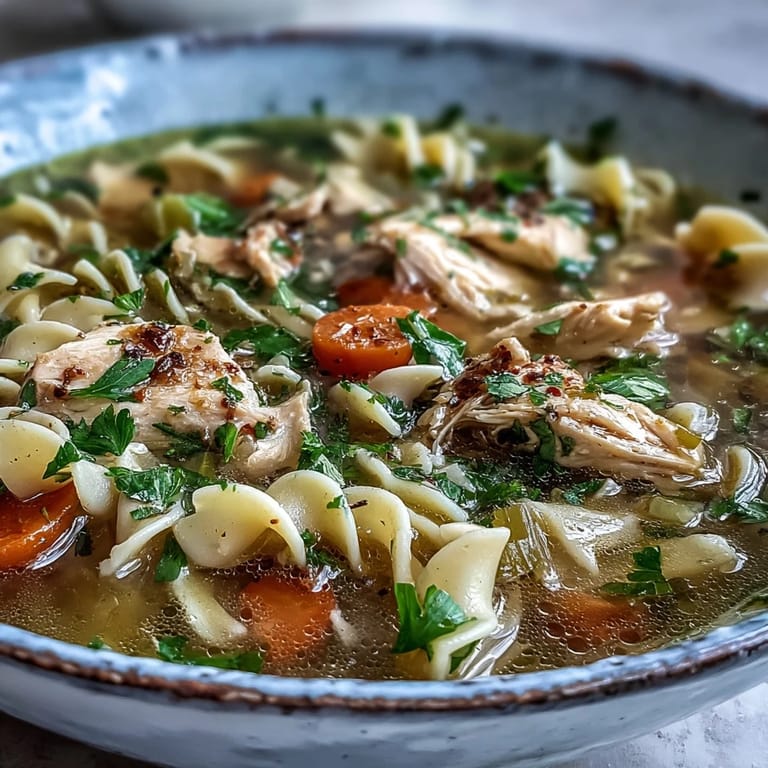
 My neighbor knocked on my door last January holding an empty thermos and asking if I had any soup to spare. Her kids were home sick, and she looked exhausted. I threw together this chicken noodle soup in under an hour, and by evening she texted me a photo of two empty bowls with the caption, "Magic." It reminded me that the simplest recipes often carry the most weight. There's nothing fancy here, just tender chicken, soft noodles, and vegetables that melt into a broth so comforting it feels like a hug from the inside out.
I made this soup on a Wednesday night after a long work shift, standing at the stove in my socks while snow piled up outside. The smell of onions and garlic filled the kitchen, and my partner wandered in asking what smelled so good. We ended up eating straight from the pot, standing by the counter, too hungry to wait for bowls. That night it became our unofficial winter ritual.
Ingredients
- Boneless, skinless chicken breasts (about 350 g), diced: These cook quickly and stay tender, but if you have thighs on hand, use those instead for extra richness and flavor.
- Medium onion, diced: The aromatic base that sweetens as it softens, adding depth without overpowering the broth.
- Carrots, peeled and sliced: They bring a subtle sweetness and bright color, plus they hold their shape beautifully in the soup.
- Celery stalks, sliced: Essential for that classic chicken soup flavor, with a slight bitterness that balances the sweetness of the carrots.
- Garlic, minced: Just two cloves add a warm, savory note that blooms when you stir it in.
- Low sodium chicken broth (1.5 liters): The foundation of the soup, letting you control the salt level and layer in your own seasoning.
- Egg noodles (120 g): Wide, soft, and comforting, they soak up the broth and make every bite hearty.
- Bay leaf: One leaf adds a subtle earthiness that ties all the flavors together, just remember to fish it out before serving.
- Dried thyme and parsley: These herbs bring a gentle, familiar warmth without needing fresh bunches from the store.
- Salt and black pepper: Season to taste, because every broth is different and your palate knows best.
- Olive oil: A couple of tablespoons to start the sauté and keep everything from sticking.
Tired of Takeout? 🥡
Get 10 meals you can make faster than delivery arrives. Seriously.
One email. No spam. Unsubscribe anytime.
Instructions
- Soften the vegetables:
- Heat the olive oil in a large pot over medium heat, then add the onion, carrots, and celery. Let them sauté for 4 to 5 minutes, stirring occasionally, until they soften and the onion turns translucent.
- Add the garlic:
- Stir in the minced garlic and cook for just 1 minute, letting it release its fragrance without browning or turning bitter.
- Cook the chicken:
- Toss in the diced chicken and stir it around for 3 to 4 minutes, just until the outside is no longer pink. It will finish cooking in the broth, so don't worry about perfection here.
- Build the broth:
- Pour in the chicken broth, then add the bay leaf, thyme, parsley, salt, and pepper. Bring everything to a gentle boil, then reduce the heat and let it simmer for 10 minutes to let the flavors meld.
- Add the noodles:
- Stir in the egg noodles and simmer for another 8 to 10 minutes, until the noodles are tender and the chicken is cooked through. Taste and adjust the seasoning if needed.
- Finish and serve:
- Remove the bay leaf, ladle the soup into bowls, and sprinkle with extra parsley. Serve hot with crusty bread on the side if you have it.
 Pin It
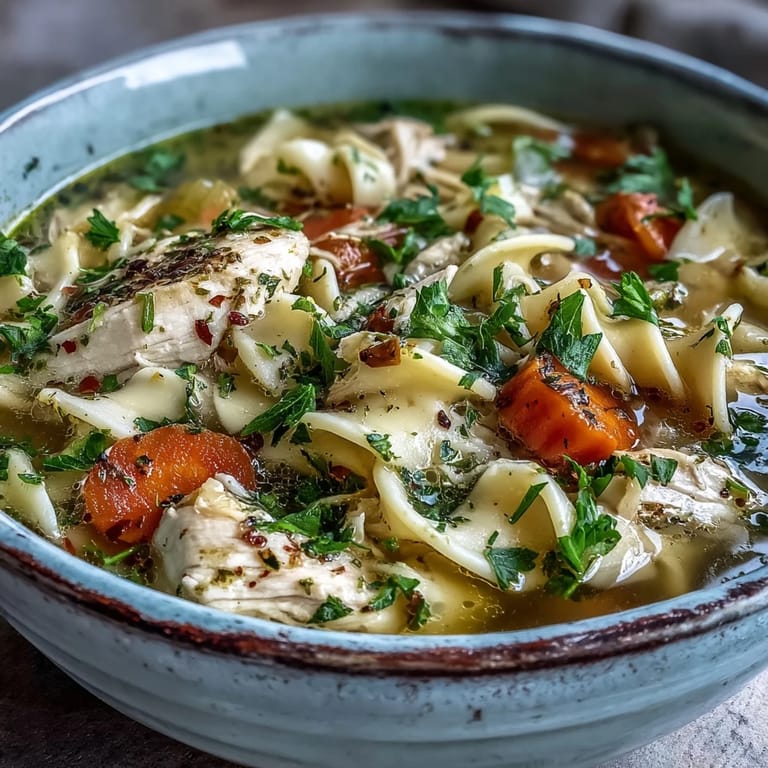
 The first time I brought this soup to a friend recovering from surgery, she teared up after the first spoonful. She said it reminded her of her grandmother's kitchen, even though we'd never met. That's when I realized this soup doesn't just feed people, it reaches backward into memory and forward into care, all in one pot.
Making It Your Own
If you want a richer, more traditional flavor, use bone in chicken pieces and let them simmer longer, then shred the meat off the bones before adding the noodles. A splash of lemon juice at the end brightens everything up and cuts through the richness. For a gluten free version, swap in gluten free noodles or even rice, and double check your broth label for hidden wheat.
What to Serve It With
This soup is a full meal on its own, but a thick slice of crusty bread or a few buttery crackers on the side makes it even more satisfying. If you're feeling fancy, pour a glass of crisp Sauvignon Blanc, the acidity pairs beautifully with the savory broth. On nights when I'm too tired to think, I just tear into a baguette and call it dinner.
Storage and Reheating
Store leftovers in an airtight container in the fridge for up to three days, but keep in mind the noodles will continue to absorb liquid. When reheating, add a splash of extra broth or water to loosen it back up. You can also freeze the soup without the noodles for up to two months, then cook fresh noodles when you're ready to serve.
- Let the soup cool completely before transferring it to the fridge or freezer to avoid condensation and ice crystals.
- Reheat gently on the stovetop over medium low heat, stirring occasionally, until warmed through.
- Taste and adjust the seasoning after reheating, flavors can dull a bit in the cold.
 Pin It
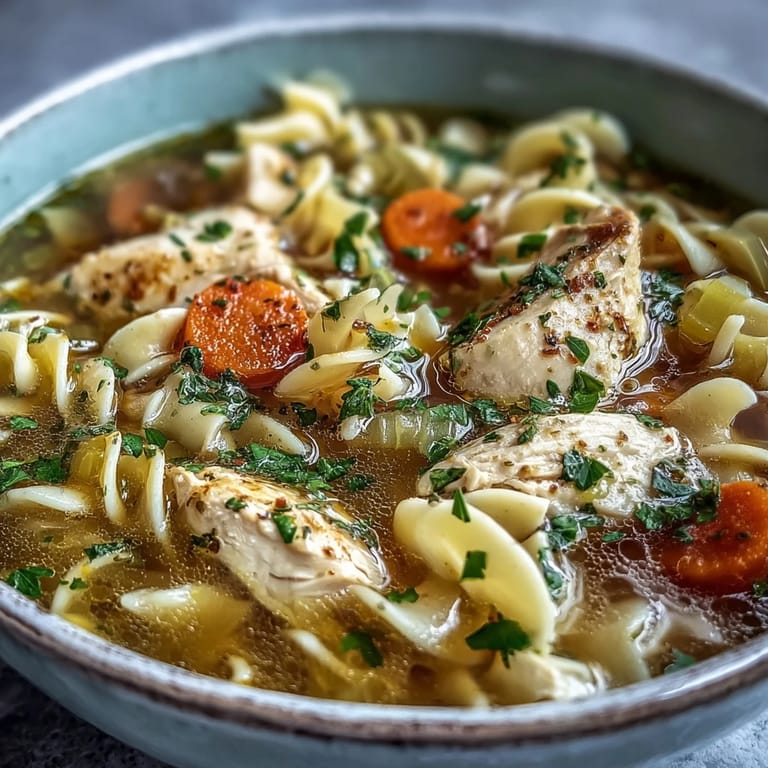
 This soup has become my answer to cold nights, bad days, and the question of what to bring when someone needs comfort. It's proof that you don't need complexity to create something that feels like home.
Recipe Q&A
- → Can I use bone-in chicken instead of boneless breasts?
Yes, bone-in chicken adds richer flavor to the broth. Simmer it longer until fully cooked, then remove, shred the meat, and return it to the pot.
- → What type of noodles work best for this soup?
Traditional egg noodles are ideal, but you can substitute with wide pasta shapes, rotini, or gluten-free noodles. Cook according to package directions for best results.
- → How can I make the broth more flavorful?
Use homemade chicken stock if available, add a splash of lemon juice for brightness, or include a parmesan rind while simmering. Fresh herbs also enhance the depth of flavor.
- → Can I prepare this soup ahead of time?
Yes, make it up to 3 days ahead and refrigerate. Store noodles separately if possible, as they absorb liquid. Reheat gently and add fresh noodles or extra broth when serving.
- → What vegetables can I add or substitute?
Add peas, corn, green beans, or spinach in the last few minutes of cooking. You can also include parsnips, turnips, or zucchini for variety while maintaining the classic flavor profile.
- → How do I store and reheat leftovers?
Store in an airtight container in the refrigerator for up to 4 days or freeze for up to 3 months. Reheat on the stovetop over medium heat, adding extra broth if needed as noodles absorb liquid.