 Pin It
 There's something about roasted garlic that stops me mid-conversation. A friend brought a batch of this soup to my place on a rainy Tuesday, and the smell hit me before she even set the pot down—sweet, caramelized, nothing like the sharp garlic I expected. I watched her ladle it into bowls with such ease that I had to ask for the recipe. She laughed and said it was deceptively simple, just tomatoes and garlic doing what they do best in a hot oven.
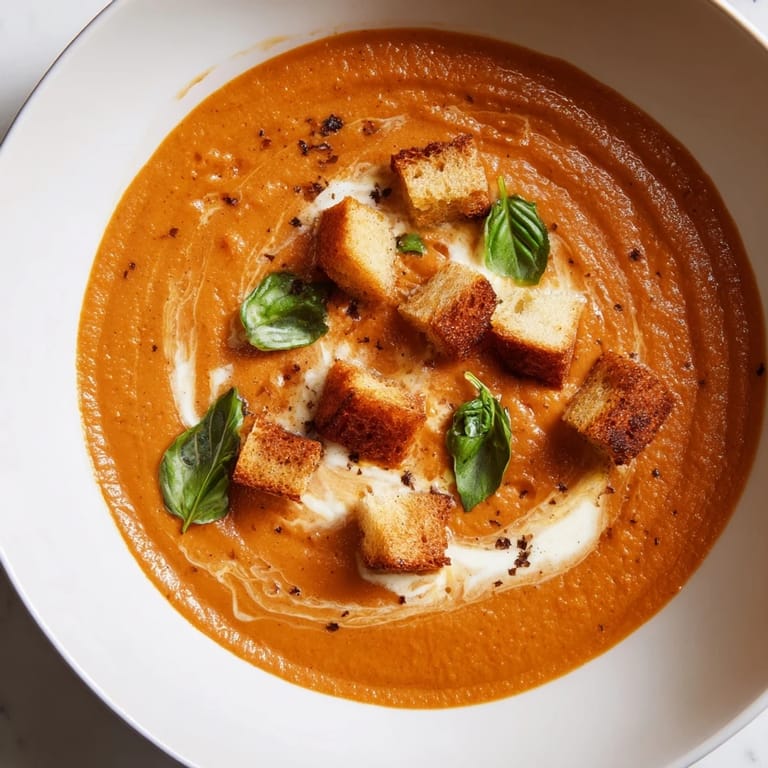
I made this for my family the first time on a chilly October evening when everyone was tired and hungry but nobody wanted takeout. The moment I poured it into mugs and topped them with basil and croutons, my teenager put down her phone. That never happens. Soup shouldn't be underestimated—especially this one.
Ingredients
- Ripe tomatoes (1.5 lbs): Look for ones that smell like tomatoes, not like the inside of a refrigerator; the sweeter the tomato, the less sugar you'll need to balance acidity later.
- Large yellow onion: The wedges caramelize alongside the tomatoes, adding a subtle sweetness that rounds out the soup without overpowering it.
- Whole garlic bulb: Roasting mellows the garlic into something creamy and nutty; this is where the soup's soul lives.
- Olive oil (2 tbsp): Use something you'd actually taste; good olive oil changes the final flavor more than you'd think.
- Heavy cream (1/2 cup): Swirl it in at the end to add richness without turning the soup into a curry.
- Vegetable broth (2 cups): Homemade is lovely, but good store-bought works just fine; it's there to help the blender do its work, not to dominate.
- Salt, pepper, and optional smoked paprika: Season boldly before blending, taste after, and adjust—the roasted vegetables are forgiving.
Tired of Takeout? 🥡
Get 10 meals you can make faster than delivery arrives. Seriously.
One email. No spam. Unsubscribe anytime.
Instructions
- Prep your vegetables for roasting:
- Halve your tomatoes and cut the onion into chunky wedges—don't overthink the cuts, they're going to collapse anyway. Slice the top off the garlic bulb to expose the cloves, then drizzle the exposed part with a little olive oil and wrap it loosely in foil so the cloves steam and roast together.
- Season and roast:
- Spread the tomatoes and onions on a baking sheet, drizzle with olive oil, sprinkle with salt and pepper, and slide it all into a 400°F oven alongside the garlic. The kitchen will smell incredible after about 20 minutes, but stay patient—you want the tomatoes to look almost caramelized and slightly shriveled, around 35–40 minutes total.
- Extract the roasted garlic:
- Once everything has cooled enough to handle without burning your fingers, squeeze the soft roasted garlic cloves out of their papery skins into a small bowl; they'll come out like butter.
- Blend until smooth:
- Transfer the roasted tomatoes, onions, and garlic to a blender, add the vegetable broth, and blend until completely smooth—work in batches if your blender is smaller. This is where the soup transforms from ingredients into something velvety.
- Finish and taste:
- Pour the blended mixture into a large pot, stir in the heavy cream and smoked paprika if you're using it, then taste. If the tomatoes were acidic, a pinch of sugar softens that edge without making it sweet.
- Simmer and serve:
- Let it warm gently over medium-low heat for about 10 minutes, stirring occasionally. Ladle into bowls, top with fresh basil and croutons, and watch people's faces light up.
 Pin It
 There was a moment when I realized my partner had quietly ladled thirds into her bowl without saying anything. She just kept eating, occasionally adding another crouton, completely focused. That's when I understood that food doesn't always have to be complicated to matter.
The Magic of Roasted Vegetables
Roasting tomatoes and garlic together is like letting them have a conversation in the oven. The heat brings out sugars you didn't know were there, and the garlic loses its bite entirely, becoming almost sweet and textured like peanut butter. It's a technique that works for other soups too—mushroom, pepper, even carrot—once you understand that roasting is an investment in flavor that actually saves you time later.
Variations and Add-Ons
I've made this soup in at least ten different ways by now, and it rewards experimentation. Sometimes I add a splash of balsamic vinegar for depth, other times a handful of spinach just before serving to sneak in greens without anyone noticing. A friend who keeps bees drizzles hers with a tiny bit of raw honey and fresh thyme, and it's become her signature way of serving it.
Making It Your Own
The version you make first will be delicious, but the version you make fifth time will be even better because you'll have tasted it enough times to know exactly where it needs adjusting. Listen to your instincts, not a recipe. For a vegan version, substitute the heavy cream with coconut cream or cashew cream, which adds its own kind of richness. For extra depth, add smoked paprika and a pinch of chili flakes; for comfort, serve it with a grilled cheese sandwich on the side.
- Taste as you go—acidity varies with tomatoes, so you might need more sugar than the recipe suggests or none at all.
- An immersion blender works just as well as a full blender and requires less cleanup.
- This soup freezes beautifully, so make double and save some for a future Wednesday night when you're too tired to cook.
 Pin It
 Soup like this reminds you why cooking matters. It's simple enough to make on a weeknight, good enough to serve to people you care about, and honest in the way that really good food always is.
Recipe Q&A
- → How do you roast the garlic for this dish?
Slice the top off the garlic bulb, drizzle with olive oil, wrap in foil, and roast alongside the tomatoes and onions at 400°F for 35–40 minutes until soft.
- → Can I substitute heavy cream with a non-dairy option?
Yes, plant-based creams like coconut or cashew cream can be used to maintain creamy texture without dairy.
- → What is the purpose of roasting the tomatoes and garlic?
Roasting enhances their natural sweetness and adds a caramelized depth, enriching the overall flavor and aroma.
- → How can I adjust the soup’s acidity?
Add a small amount of sugar after blending to balance the acidity if needed.
- → What garnishes complement this soup best?
Fresh basil leaves add brightness while croutons or toasted bread provide a contrasting crunchy texture.