 Pin It
 The first time I made crispy rice salmon stacks, I was trying to impress someone at a dinner party who'd just come back from Tokyo raving about the food scene there. I didn't have a sushi chef's skill, but I had an idea—what if I took the textures I loved from sushi bars and made something I could actually fry until it crackled between your teeth? That first batch of rice squares went golden and crispy in the pan, and when I topped them with cool avocado and that briny salmon mixture, something clicked. It felt fancy but approachable, and honestly, I've made them a dozen times since.
I remember making these for my sister's book club meeting on a rainy afternoon, and she kept sneaking them from the platter before everyone arrived. She'd never been huge on seafood, but the way the creamy mayo melted slightly into the warm rice converted her on the spot. Now whenever she visits, she requests them, which somehow feels like more of a compliment than any fancy recipe ever could.
Ingredients
- Sushi rice: This is the backbone—the starch and slight sweetness hold everything together and crisps up beautifully when fried, unlike regular white rice which can turn mushy.
- Rice vinegar, sugar, and salt: These three ingredients transform plain cooked rice into something with backbone and subtle tang that keeps the whole dish from feeling heavy.
- Sushi-grade salmon: Buy it from a trusted fishmonger and use it the same day—the quality difference between sushi-grade and regular salmon is night and day here.
- Sesame oil: Just a teaspoon goes a long way; it's the secret ingredient that makes people ask what that amazing smell is.
- Avocado: Pick one that yields slightly to pressure but isn't mushy—timing matters more than you'd think with this ingredient.
- Mayonnaise and sriracha: The spicy mayo is the glue that makes every layer stick together and keeps things from tasting plain.
- Sesame seeds and nori: These are your finishing touches—they add texture, visual appeal, and that authentic sushi-bar feeling.
Tired of Takeout? 🥡
Get 10 meals you can make faster than delivery arrives. Seriously.
One email. No spam. Unsubscribe anytime.
Instructions
- Cook the rice right:
- Rinse your sushi rice until the water runs completely clear—this removes excess starch that would make it gluey instead of fluffy. The 15-minute simmer followed by a 10-minute rest is non-negotiable; it lets the rice finish cooking in its own steam and keeps the grains separate.
- Season while warm:
- After the rice cools slightly, fold in your vinegar mixture gently—the warmth helps the rice absorb the flavors, and gentle folding keeps the grains intact instead of mashing them into paste. This is one of those moments where technique actually matters.
- Chill the rice cake:
- Pressing the rice into a square and chilling it makes it firm enough to cut cleanly and helps it hold together when you fry it. Line your pan with parchment paper so it doesn't stick—this small step saves you from frustration.
- Prepare the salmon ahead:
- Mix your salmon with the soy sauce, sesame oil, and lime juice at least 15 minutes before you plan to assemble—the flavors marry together and taste so much better than if you rushed this step. The green onion adds brightness right at the end.
- Make your spicy mayo:
- A simple 1-to-1 ratio of mayo and sriracha works, but taste as you go because sriracha brands vary wildly in heat. This sauce is what ties everything together, so don't skip it.
- Fry the rice squares:
- Medium-high heat is your sweet spot—too high and the outside burns before the inside warms through, too low and you get mushy instead of crispy. Those 2 to 3 minutes per side is exact; I usually get a little impatient and end up poking them with a spatula too much, which I've learned only makes them break apart.
- Assemble and serve immediately:
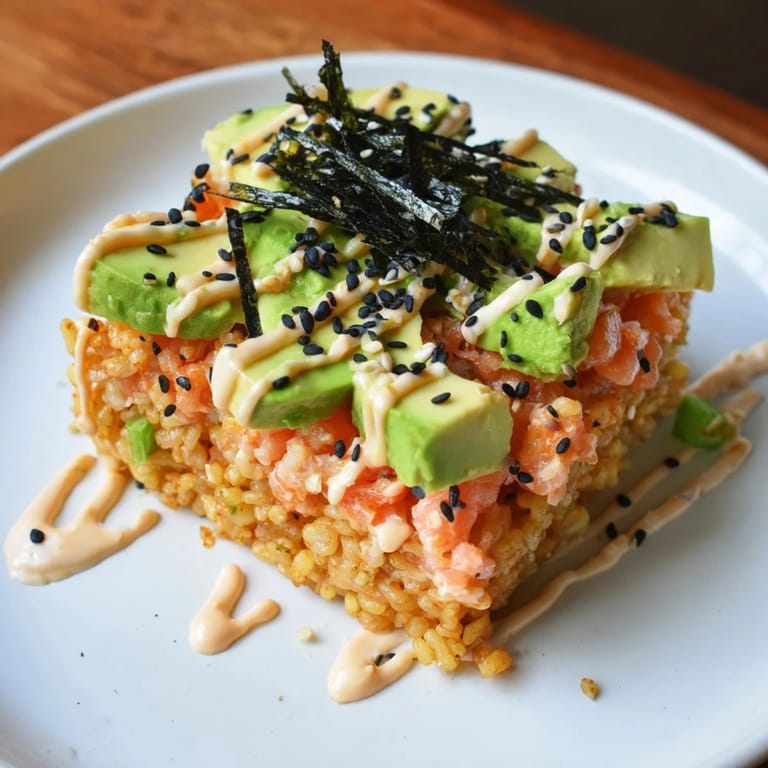
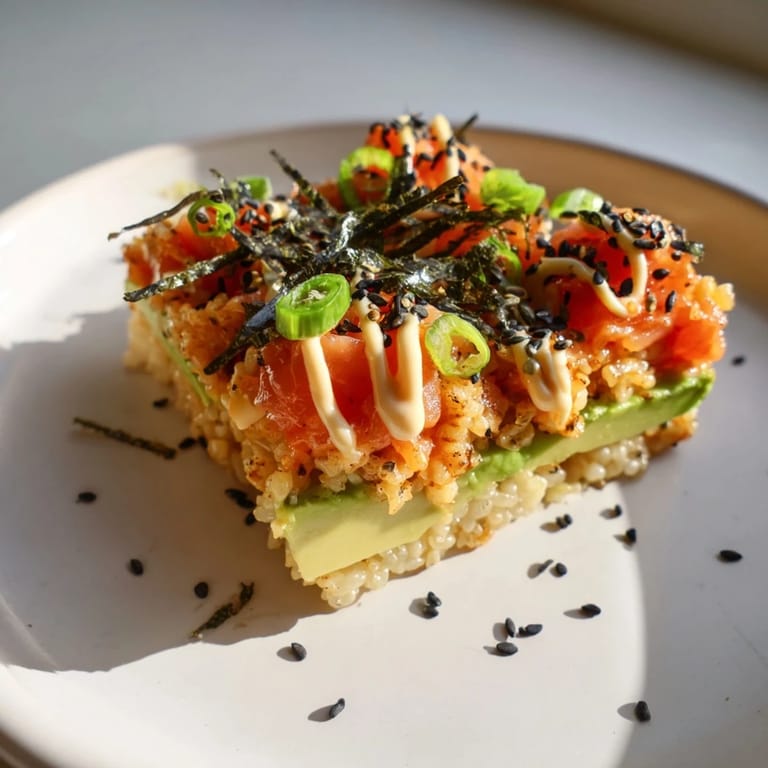
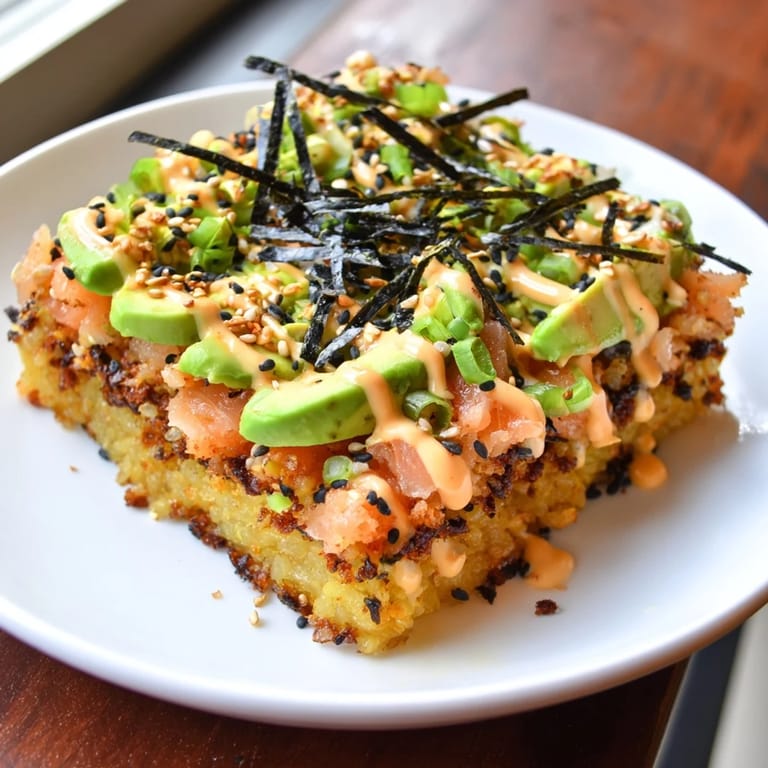
- This is the moment where everything comes together—warm crispy rice, cool creamy avocado, briny salmon, and a drizzle of spicy mayo. The temperature contrast and textural play are what make this dish sing, so don't let it sit around waiting.
 Pin It
 What surprised me most about this recipe is how it became the thing people ask for again and again, even though it's technically an appetizer. There's something about having all the sushi flavors and textures in one warm, crispy bite that feels almost indulgent for something so light.
Making the Rice Work for You
The magic of this dish lives in the rice—how it gets crispy on the outside while staying tender inside, how it takes on those subtle vinegar and sesame flavors, how it becomes almost a vehicle for everything else. I've learned that sushi rice is worth the investment because regular rice won't crisp the same way; it's starchier in a way that works beautifully here but nowhere else. The first time I tried it with jasmine rice thinking it would be fine, I got something more like a warm rice cake than the crispy-edged treasure this recipe is supposed to be. Sticking with the real thing makes all the difference, and honestly, it's not even more expensive than most rice.
Timing and Temperature Play
This is one of those recipes where every component wants to be a different temperature, and that's exactly the point. The crispy rice needs to come straight from the pan while it's still warm, the avocado should be cool and smooth, and the salmon is chilled with bright flavors that pop against the warmth. I used to assemble everything and then realize the rice had cooled and lost its crispness, which is like serving champagne that's gone flat. Now I make sure my toppings are prepped and ready, I fry the rice last, and I assemble faster than I think I need to. Serving immediately feels urgent, but that urgency is what keeps everything perfect.
Building Flavor and Texture
What makes this stack more interesting than just rice with toppings is how each layer adds something different—the umami from soy sauce and sesame, the brightness of lime and green onion cutting through the richness, the creaminess of avocado and mayo balancing everything out. The sesame seeds and nori aren't just decoration; they add crunch and a salty ocean flavor that brings the whole thing into focus. I've played with substitutions over time, and honestly, the more you stick to the recipe, the better it sings.
- Toast your sesame seeds lightly in a dry pan before using them—it only takes 30 seconds but changes their whole flavor.
- If raw salmon makes you nervous, seared salmon or even high-quality canned salmon works beautifully here.
- Make this up to the frying step ahead of time, and you've got an impressive appetizer that comes together in minutes.
 Pin It
 This recipe taught me that sometimes the most impressive dishes are just about respecting each ingredient, getting the technique right, and letting them all work together instead of competing. Every time I make it, I remember why it became a favorite so quickly.
Recipe Q&A
- → How is the crispy rice prepared?
The sushi rice is cooked and seasoned with vinegar, sugar, and salt, then pressed into a pan and chilled. It’s cut into squares and fried in vegetable oil until golden and crunchy.
- → What types of salmon work best for this dish?
Sushi-grade raw salmon is ideal for freshness and texture, but canned or cooked salmon can be used as a substitute if preferred.
- → How can the spicy mayo be made?
Mix mayonnaise with sriracha to your preferred heat level and set aside for drizzling over the stack.
- → Are there any suggested garnishes?
Sesame seeds, chopped chives, and thin strips of nori are great toppings that add flavor and visual appeal.
- → Can this dish be served as a main meal?
While it’s commonly served as an appetizer, the stack works well as a light meal, especially when paired with pickled ginger or a crisp white wine.