 Pin It
 My grandmother would start preparing lutefisk weeks in advance, filling her kitchen with the smell of transformation. She treated those translucent dried cod fillets like treasures, soaking them patiently day after day, checking them the way someone might check on a slowly recovering friend. The first time I watched her pull a perfectly baked piece from the oven and taste it with closed eyes, I understood this wasn't just dinner—it was a ritual, a connection to something much older than both of us. Now, whenever December arrives, I find myself doing the same thing she did, and the kitchen fills with that same quiet anticipation.
I made this for a friend who'd never had lutefisk, and she was convinced it would taste like the ocean in the worst way possible. Halfway through her first bite, her expression changed completely—surprise, then recognition, then genuine pleasure. She asked for the recipe that night, and now it's become her own winter tradition with her family. That moment taught me that food which seems intimidating from the outside often becomes beloved once you actually taste it.
Ingredients
- Dried cod (lutefisk): This is your foundation—seek it at Scandinavian markets or specialty grocers, and don't mistake it for regular stockfish, which is tougher and requires different treatment.
- Cold water: More than you think you need; the soaking process is gradual and generous, and inconsistent water changes can leave your fish tasting off.
- Coarse salt: A brief salt cure after soaking actually helps firm up the fish's texture just slightly, something my grandmother swore by.
- Unsalted butter: Use real butter here; it makes a visible difference in the sauce's smoothness and flavor.
- All-purpose flour: Keep gluten-free flour on hand if anyone in your household needs it—the sauce works just as well, though you might need an extra minute of cooking.
- Whole milk: Don't skimp and use skim; the richness is what makes this sauce feel special.
- Dijon and whole-grain mustard: The combination gives the sauce complexity—one adds sharpness, the other texture and earthiness.
- Sugar: Just a teaspoon, but it softens the mustard's bite and rounds out the flavors.
- Boiled potatoes: Waxy varieties like Yukon Gold hold their shape better and pair more naturally with the delicate fish.
Tired of Takeout? 🥡
Get 10 meals you can make faster than delivery arrives. Seriously.
One email. No spam. Unsubscribe anytime.
Instructions
- Begin the long soaking:
- Rinse your dried cod under cold water first to remove surface dust, then place it in a large container where it can spread out comfortably. Cover completely with cold water—the fish will gradually absorb moisture and transform texture. Change the water every single day without fail; this removes the lye-like qualities that make the fish famous for its unusual smell.
- Finish the soaking and salt cure:
- After 5 to 6 days, drain the fish and sprinkle it generously with coarse salt, letting it sit for 30 minutes. You'll notice the fish becomes slightly firmer; this is exactly what you want. Rinse the salt away completely and pat the fish dry with paper towels.
- Bake until flaky:
- Preheat your oven to 200°C and arrange the fish in a baking dish, covering it loosely with foil to prevent the top from browning. The gentle heat coaxes the fish into a state of perfect flakiness in 25 to 30 minutes—you'll know it's ready when it breaks apart easily with a fork and the flesh is completely opaque.
- Build the mustard sauce:
- Melt butter over medium heat, then whisk in flour and let it cook for just one minute, stirring constantly so it stays pale and doesn't brown. Add milk gradually while whisking, which prevents lumps and creates a silky base. Let it simmer for a few minutes until it coats the back of a spoon, then stir in both mustards, sugar, salt, and pepper until the flavors blend together smoothly.
- Come together at the table:
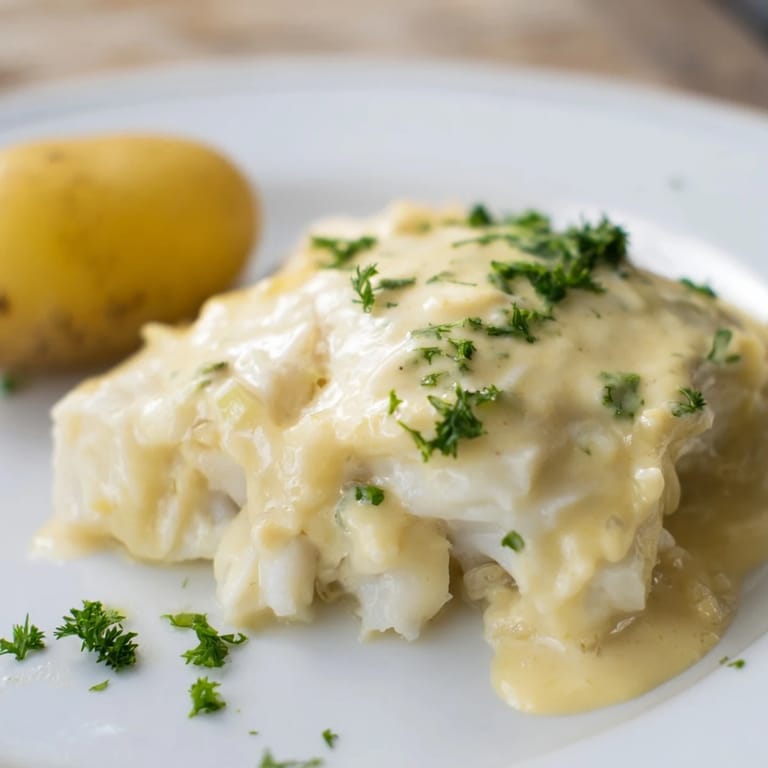
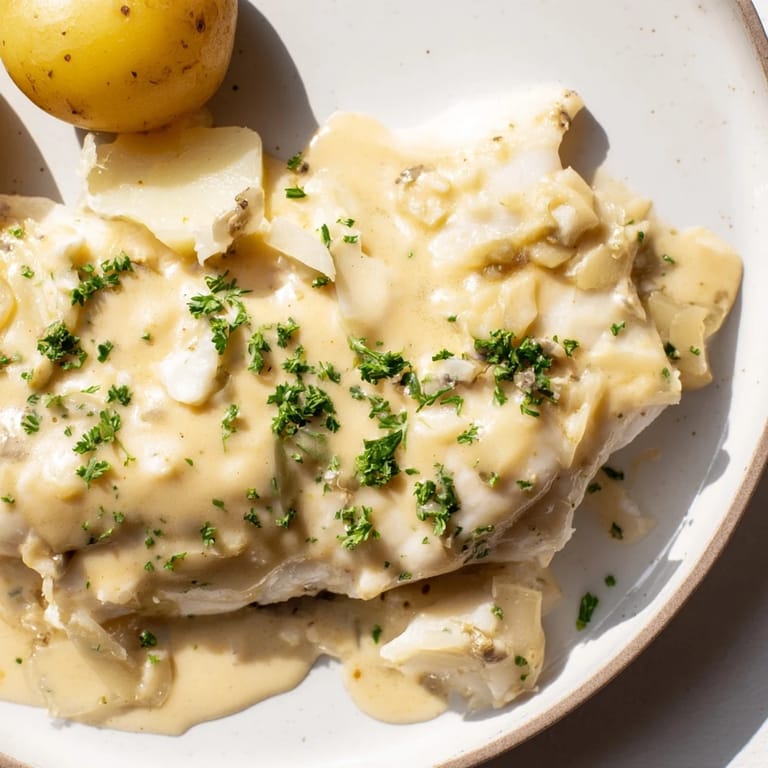
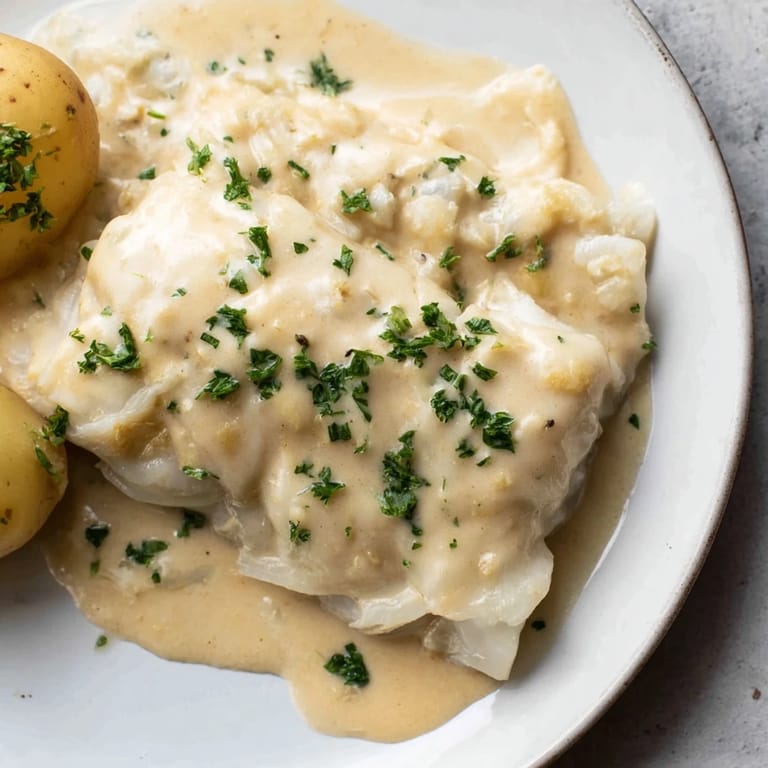
- Plate the hot fish with potatoes and bread, then spoon the warm mustard sauce generously over everything. A scatter of fresh parsley adds brightness if you have it on hand, though it's entirely optional.
 Pin It
 One year my cousin brought his skeptical American girlfriend to our December dinner, and she watched the whole preparation with obvious concern. By the end of the meal, she was asking about bringing lutefisk to their own holiday celebrations, which made my grandmother laugh in that satisfied way that meant she'd converted someone. Now I think of that moment whenever I make this dish—food that bridges distance and doubt has real power.
Why This Matters in Winter
Lutefisk belongs to winter in a way that summer dishes never could. It's warming without being heavy, substantial without feeling bulky, and the ritual of preparation gives you something meaningful to do during those quiet December weeks. The long soaking becomes meditative, a countdown to the holiday itself, and somehow a simple fish dinner becomes an anchor for family gathering and tradition.
Making It Your Own
While lutefisk is traditional, the mustard sauce is where you can let your instincts guide you. Some families add a touch of caraway seed to the sauce, others whisk in fresh dill at the end, and a few brave souls add a tiny bit of horseradish for unexpected warmth. Respect the fish and soaking process—that's non-negotiable—but the sauce is genuinely yours to adjust and season until it tastes exactly right to your palate. The beauty of this dish is that it tolerates small personal variations while staying completely itself.
Serving and Pairing
Serve lutefisk hot on warm plates, because the fish cools quickly and loses appeal when tepid. The potatoes should be buttered and salted simply, and the bread should be crisp enough to provide textural contrast. A chilled glass of aquavit cuts through the richness perfectly if you have it, though a crisp lager or even sparkling water works just as well.
- Never reheat leftover lutefisk; eat it immediately while the texture is still perfect.
- Any remaining mustard sauce keeps for a few days in the refrigerator and is excellent on roasted vegetables or boiled eggs.
- This dish feeds four comfortably and shouldn't be doubled in a home oven without adjusting baking time and temperature slightly.
 Pin It
 This is the kind of dish that connects you to generations of people who made it exactly this way, with the same patience and care. When you set a plate of lutefisk in front of someone—especially someone trying it for the first time—you're offering them a quiet kind of magic, the sort that only reveals itself through the simple act of paying attention.
Recipe Q&A
- → Why soak the dried cod for several days?
Soaking rehydrates the dried cod, removing excess salt and softening its texture to ensure a tender, flaky finish after baking.
- → Can gluten-free flour be used in the mustard sauce?
Yes, substituting with gluten-free flour works well to keep the sauce smooth and suitable for gluten-sensitive diets.
- → How do you know when the fish is properly cooked?
The cod should turn opaque and flake easily when tested with a fork after about 25–30 minutes baking at 200°C (390°F).
- → What sides traditionally accompany this dish?
Boiled potatoes and crisp or flatbread are classic accompaniments, balancing the rich mustard sauce and flaky fish.
- → How should the mustard sauce be seasoned?
Season with Dijon and whole-grain mustard, a touch of sugar, salt, and white pepper, adjusting to taste for a creamy, tangy flavor.
- → Is this dish suitable for pescatarian diets?
Yes, it features fish and dairy but excludes meat, fitting well within pescatarian guidelines.