 Pin It
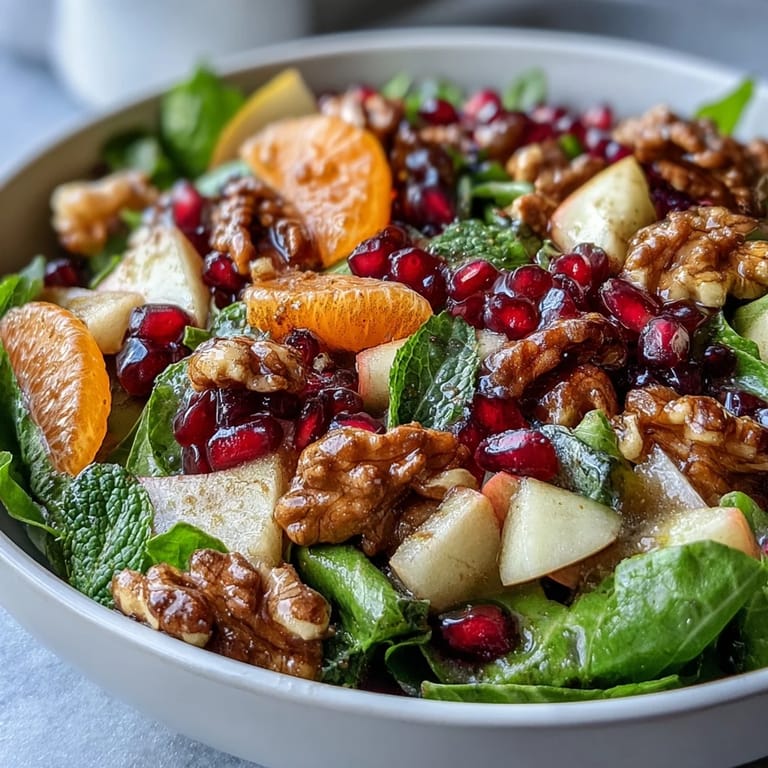
 Last January, I was standing in my kitchen on a gray afternoon, feeling like I needed something to shake up the monotony of heavy winter meals. My neighbor had just dropped off a bag of pomegranates from her tree, and I found myself splitting one open at the sink, watching those jewel-like seeds tumble into a bowl. That simple moment of discovery—the burst of tart juice on my fingers, the bright color against the white ceramic—sparked this salad into being. It's become my go-to when I want to feel like I'm eating something that actually glows on the plate.
I made this for a book club night where everyone showed up stressed and hungry, and something shifted when we started eating. People actually paused mid-conversation, and someone asked for the recipe before dessert even arrived. That's when I realized this wasn't just a salad—it was the kind of thing that brings a little brightness to an ordinary evening and somehow makes people want to sit longer at the table.
Ingredients
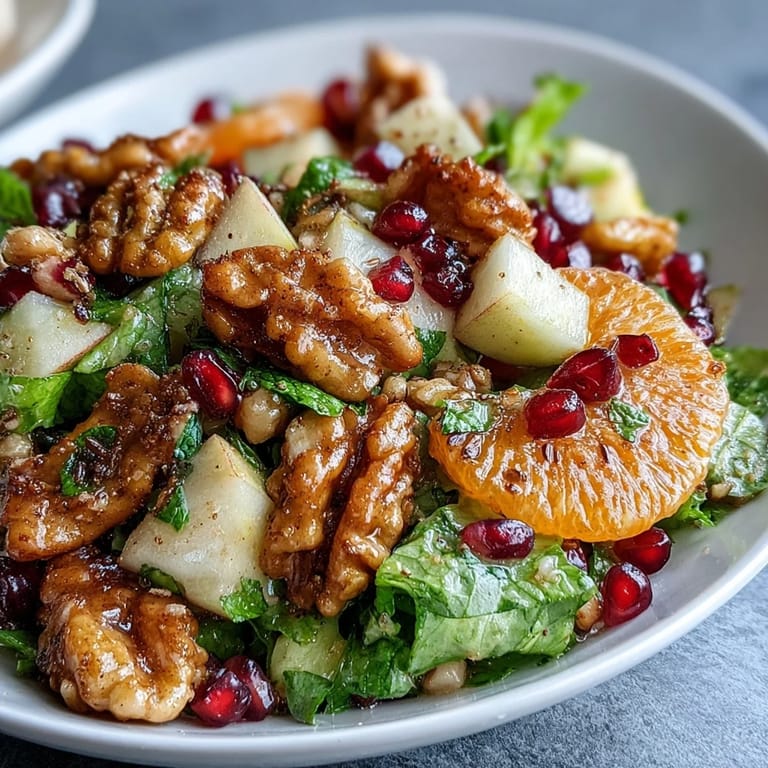
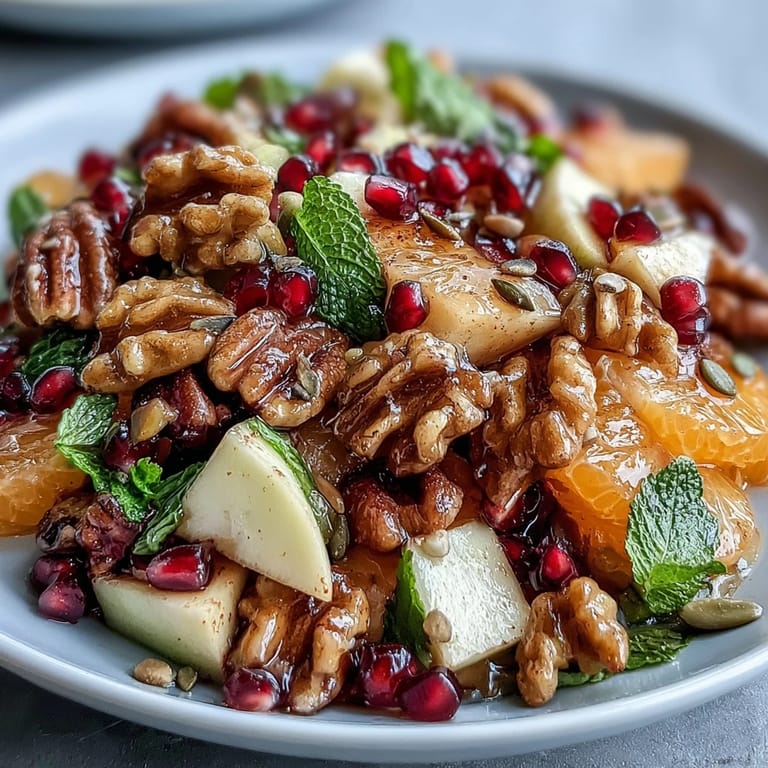
- Pomegranate (1 large, seeds only): These are the stars of the show—their tart sweetness and juicy pop anchor the entire salad, so choose one that feels heavy for its size.
- Orange (1 large, peeled and segmented): The natural citrus juice mellows the pomegranate's tang and adds a subtle floral note.
- Apple (1 crisp, cored and diced): A Granny Smith or Honeycrisp works best here because you want that snap that stays even after dressing.
- Pear (1 ripe, cored and diced): The pear brings a buttery softness that balances all the crisp elements.
- Walnuts (1/2 cup, roughly chopped): Don't chop them too fine—you want irregular pieces that catch the dressing and stay crunchy.
- Pumpkin seeds (2 tbsp): These add earthiness and a subtle nuttiness that deepens as the salad sits.
- Sunflower seeds (2 tbsp): They're lighter than pumpkin seeds and keep the texture from getting too dense.
- Extra-virgin olive oil (2 tbsp): Use one you'd taste on its own—this dressing is so simple that mediocre oil will show.
- Lemon juice (1 tbsp, freshly squeezed): Fresh is non-negotiable here; bottled juice tastes flat against the fruit.
- Honey or maple syrup (1 tsp): Just enough to whisper sweetness without making it a dessert.
- Ground cinnamon (1/4 tsp): This seems unlikely but trust it—the warmth makes the fruit taste more like itself.
- Sea salt (pinch): A tiny amount brings all the flavors into focus.
- Fresh mint (2 tbsp, chopped, optional): If you skip this, you won't regret it, but if you have it, it adds a cool surprise.
Tired of Takeout? 🥡
Get 10 meals you can make faster than delivery arrives. Seriously.
One email. No spam. Unsubscribe anytime.
Instructions
- Gather and seed the pomegranate:
- Cut the pomegranate in half and hold it cut-side down over a bowl, then tap the back with a spoon so the seeds fall out. It's oddly meditative, and you'll lose fewer seeds this way than trying to dig them out.
- Prepare your fruit:
- Peel the orange and separate into segments, then dice the apple and pear into roughly the same size pieces so they feel intentional together. Keep the pear from browning by tossing it with a squeeze of lemon juice immediately.
- Toast your nuts and seeds (optional but recommended):
- Spread the walnuts and seeds on a dry skillet over medium heat and listen for them to start smelling toasty—usually just 3 or 4 minutes. This step transforms them from pleasant to unforgettable, but it's not essential if you're in a rush.
- Combine in the bowl:
- Put all the pomegranate seeds, orange segments, apple, and pear into a large salad bowl, then add the walnuts, pumpkin seeds, and sunflower seeds and give everything a gentle toss. You want everything to know each other but not to bruise the fruit.
- Make the dressing:
- In a small bowl, whisk together the olive oil, lemon juice, honey or maple syrup, cinnamon, and sea salt until the mixture looks slightly emulsified and the honey has dissolved. Taste it before adding to the salad—it should taste bright and slightly sweet, not overpowering.
- Dress and serve:
- Drizzle the dressing over the salad and toss gently but thoroughly so every piece gets coated. Scatter the mint on top if you're using it, and serve right away or let it sit in the fridge for up to 2 hours if you want the flavors to marry.
 Pin It
 My sister called me one afternoon and said she'd made this for her kids' lunch, and they actually ate it without complaining. She sounded genuinely amazed, which made me laugh, but also made me realize this salad has this quiet power—it sneaks nutrition past people's defenses because it tastes like a treat rather than a responsibility.
When Toasting Makes All the Difference
The first time I made this salad raw, it was good. The second time I toasted the walnuts and seeds for just a few minutes in a dry pan, it became something I actually craved. That gentle heat wakes up the oils in the nuts and brings out a deeper flavor that feels almost caramelized. It's a small move that takes maybe five minutes, but it's the difference between a salad you eat because it's healthy and one you eat because you actually want it.
The Cinnamon Secret
I hesitated the first time a friend suggested adding cinnamon to a fruit salad. It sounded wrong, like mixing categories that shouldn't touch. But a tiny pinch of warm spice against bright pomegranate and citrus is like opening a window in the middle of winter—it adds depth without announcing itself. You won't taste cinnamon exactly, but you'll notice the fruit tastes more vibrant and alive.
Making It Your Own
The beauty of this salad is that it's flexible without losing its identity. I've swapped the pear for persimmons in late fall, replaced the apple with kiwi when I wanted something more tropical, and once used pomegranate molasses in the dressing instead of honey for a deeper tang. The core—pomegranate, citrus, nuts, and that warm spiced dressing—stays the same, but the details can shift with what you have on hand.
- Try swapping the pear for persimmons or the apple for kiwi depending on what's in season and what you're craving.
- A drizzle of pomegranate molasses in place of honey creates a more sophisticated, slightly tart version.
- If you have pistachios instead of walnuts, they're wonderful here and add a pretty green color.
 Pin It
 This salad has become my answer to the question of what to bring to someone's house when you want to show up with something that feels thoughtful but doesn't require you to spend all day cooking. There's something about offering food that's this colorful and alive that says more than words ever could.
Recipe Q&A
- → Can I prepare this ahead of time?
Yes, you can prepare the fruits and nuts separately up to 4 hours in advance. Store them in sealed containers in the refrigerator and toss with the dressing just before serving to maintain freshness and texture.
- → What other fruits work well in this salad?
Persimmons, kiwi, grapes, or fresh figs make excellent additions or substitutions. The key is choosing fruits that hold their shape well and complement the sweet-tart profile of pomegranate.
- → How do I easily remove pomegranate seeds?
Cut the pomegranate in half, hold each half cut-side down over a bowl, and tap firmly with a wooden spoon. The seeds will fall out easily while the white membrane stays attached to the rind.
- → Can I make this vegan?
Absolutely. Simply substitute honey with maple syrup or agave nectar in the dressing. The rest of the ingredients are naturally plant-based and suitable for vegan diets.
- → How long does this stay fresh?
Best enjoyed immediately or within 2 hours of dressing. The undressed fruit and nut mixture can be refrigerated for up to 2 days, though the nuts may lose some of their crunch over time.