 Pin It
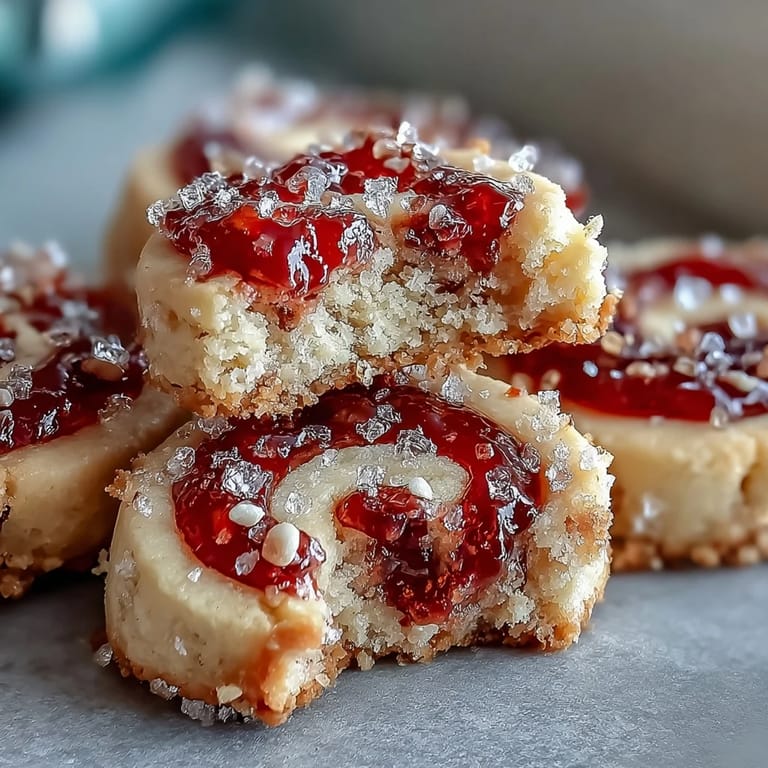
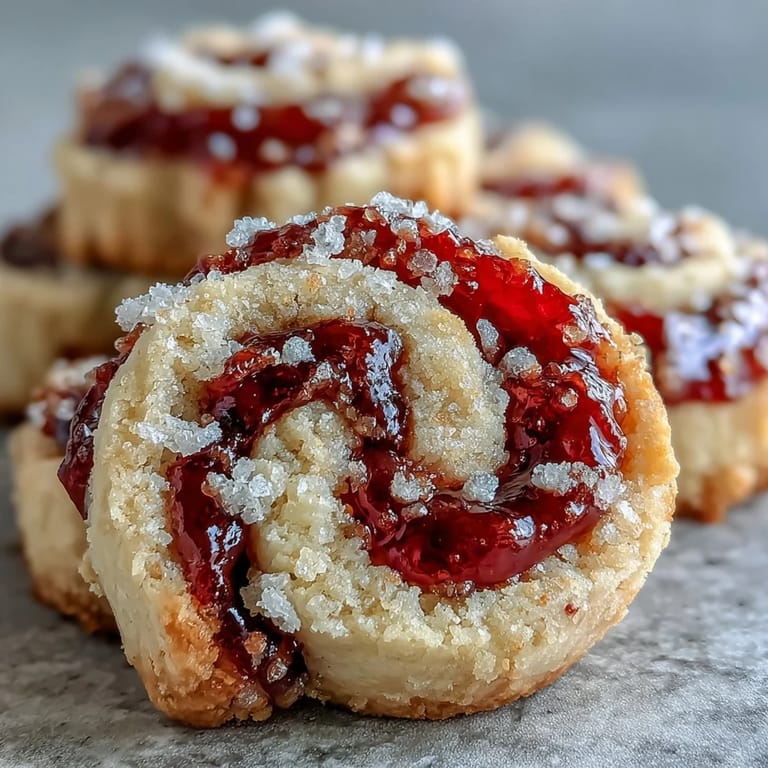
 The smell of butter browning at the edges is what stopped me mid-step one Saturday morning. I was testing a batch of shortbread cookies for a friend's baby shower, and I'd tucked a spoonful of raspberry jam into each round just to see what would happen. The jam bubbled gently, caramelizing at the rim, and when I pulled them out, the contrast between crisp golden edge and soft, fruity center made me forget I was supposed to be cleaning the kitchen. I ate three before they cooled.
I started making these every time someone asked for a homemade gift that felt thoughtful but didn't require an entire weekend. My neighbor once told me she kept them in a tin on her counter for two weeks, sneaking one every afternoon with black tea. She said the raspberry swirl reminded her of her grandmother's pantry, even though her grandmother never made cookies. Sometimes a flavor just lands that way.
Ingredients
- Unsalted butter, softened: The foundation of any good shortbread, it should be soft enough to cream but not melted or greasy.
- Powdered sugar: Dissolves more smoothly than granulated, giving the dough a finer, melt-in-your-mouth crumb.
- Vanilla extract: A teaspoon is just enough to add warmth without competing with the fruit.
- All-purpose flour: Measure it carefully; too much and the cookies turn dense, too little and they spread too thin.
- Salt: A quarter teaspoon sharpens the butter flavor and keeps the sweetness in check.
- Raspberry jam or preserves: Choose one with visible seeds and a thick consistency so it doesn't run during baking.
- Granulated sugar (for dusting): Optional, but it adds a delicate sparkle and a hint of extra sweetness on top.
Tired of Takeout? 🥡
Get 10 meals you can make faster than delivery arrives. Seriously.
One email. No spam. Unsubscribe anytime.
Instructions
- Preheat and Prep:
- Set your oven to 350°F (175°C) and line two baking sheets with parchment paper. This keeps the bottoms from browning too fast and makes cleanup easy.
- Cream the Butter and Sugar:
- In a large bowl, beat the softened butter and powdered sugar with an electric mixer until the mixture looks pale and fluffy, about 2 to 3 minutes. Scrape down the sides halfway through so everything incorporates evenly.
- Add Vanilla:
- Pour in the vanilla extract and mix until just blended. The scent will fill the kitchen immediately.
- Combine Dry Ingredients:
- In a separate bowl, whisk the flour and salt together, then add it to the butter mixture a little at a time, mixing on low speed until the dough just comes together. Overmixing makes the cookies tough, so stop as soon as you see no dry streaks.
- Shape and Chill:
- Turn the dough out onto a lightly floured surface and roll it into a log about 1.5 inches in diameter. Wrap it tightly in plastic wrap and refrigerate for at least 30 minutes until firm enough to slice cleanly.
- Slice the Dough:
- Use a sharp knife to cut the chilled log into rounds about 1/4 inch thick. Arrange them on the prepared baking sheets, leaving about an inch between each cookie.
- Create Indentations:
- Press the back of a teaspoon gently into the center of each round to make a small well. Don't press all the way through, just enough to cradle the jam.
- Fill with Jam:
- Spoon about half a teaspoon of raspberry jam into each indentation. Be conservative; too much jam will bubble over and burn on the pan.
- Bake:
- Slide the sheets into the oven and bake for 12 to 15 minutes, until the edges turn light golden brown. The centers will still look pale, and that's exactly right.
- Cool:
- Let the cookies rest on the baking sheets for 5 minutes to set, then transfer them to a wire rack to cool completely. They'll firm up as they cool.
- Dust (Optional):
- Once fully cooled, sprinkle a light dusting of granulated sugar over the tops for a finished, bakery-style look.
 Pin It
 One winter evening, I packed a dozen of these into a small tin and brought them to a friend who'd just had surgery. She texted me later that night to say her daughter ate four in one sitting and asked if I'd teach her how to make them. That's when I realized these cookies aren't just sweet, they're a conversation starter, a comfort, and a reason to gather around the counter with someone you care about.
Choosing Your Jam
I've tried this recipe with raspberry, apricot, blackberry, and even fig preserves, and each one brought something different to the table. Raspberry has that bright tartness that cuts through the buttery richness, but apricot adds a mellow sweetness that feels more subtle. If you're feeling adventurous, stir a pinch of lemon zest into the dough before chilling; it lifts the whole flavor and makes the fruit sing a little louder.
Storage and Gifting
These cookies keep beautifully in an airtight container at room temperature for up to a week, though they rarely last that long in my house. If you're giving them as a gift, layer them between sheets of parchment paper in a sturdy tin or box. I like to tie a ribbon around the container and tuck in a handwritten note with the recipe, because someone always asks for it.
Troubleshooting and Variations
If your cookies spread too much, the butter was likely too soft or the dough wasn't chilled long enough. If the jam overflows, you added too much or the indentation wasn't deep enough. Both are easy fixes for the next batch, and even the imperfect ones taste incredible.
- Try swapping half the all-purpose flour for almond flour for a nuttier, more delicate crumb.
- Add a tablespoon of cornstarch to the dough if you want an even more tender, melt-away texture.
- Brush the tops with a light egg wash before baking for a glossy, golden finish.
 Pin It
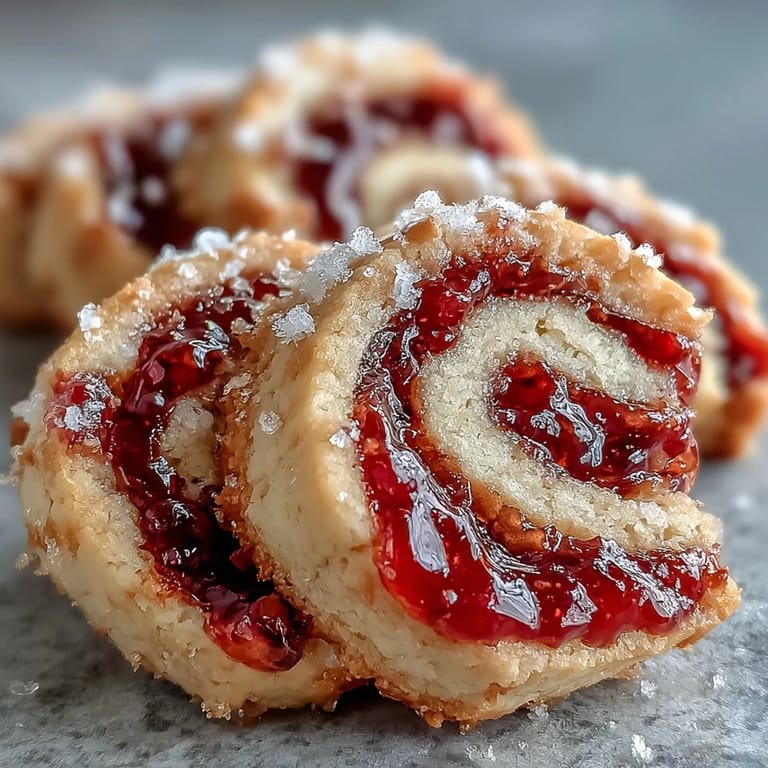
 There's something quietly satisfying about pulling a tray of these from the oven and watching the jam shimmer as it cools. They're simple, honest, and always worth the hour it takes to make them.
Recipe Q&A
- → Can I use different fruit preserves instead of raspberry?
Absolutely. Strawberry, apricot, blackberry, or cherry preserves work beautifully. Choose something with good fruit pieces for the best texture and visual appeal.
- → Why must the dough be refrigerated before slicing?
Chilling firms the butter, ensuring clean slices that hold their shape during baking. Without this step, the dough would spread too much and lose those distinct edges.
- → How do I know when the cookies are done baking?
Look for lightly golden brown edges—the centers should remain pale. Overbaking will make them crunchy rather than tender. They continue firming slightly as they cool.
- → Can I freeze the dough for later?
Yes. Wrap the log tightly in plastic wrap, then foil, and freeze for up to 3 months. Thaw in the refrigerator overnight before slicing and baking.
- → What's the purpose of dusting with sugar?
Granulated sugar adds a delicate sparkle and slight crunch that complements the soft, buttery texture. It's optional but adds a lovely finishing touch, especially for gifting.
- → My cookies spread too much—what went wrong?
Likely the dough wasn't chilled long enough, or your butter was too soft initially. Also ensure you're measuring flour correctly, not packing it down, which throws off the ratio.