 Pin It
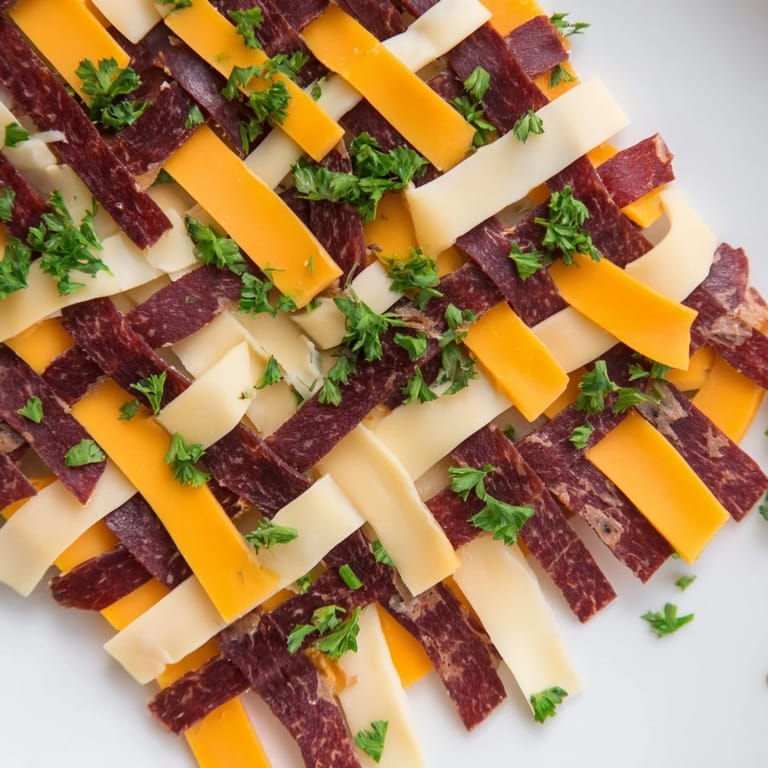
 I discovered this idea at a gallery opening where the charcuterie spread was so beautifully arranged that people were stopping mid-conversation just to look at it. Someone had woven jerky and cheese into an actual plaid pattern, and I realized right then that food didn't have to choose between being impressive and being delicious. That night I went home determined to recreate it, and what started as a fun experiment became the appetizer I now reach for whenever I want to make people smile before they even take a bite.
I made this for my neighbor's birthday potluck, and I watched her face light up when she realized the whole thing was edible art. She kept saying it was too pretty to cut into, but then she did anyway, and within ten minutes it was gone. That's when I knew this wasn't just a showpiece—it was something people genuinely wanted to eat.
Ingredients
- Beef jerky: 60 g cut into thin strips for a deep mahogany color that anchors the pattern.
- Turkey jerky: 60 g provides a lighter tan that creates contrast without being too pale.
- Pork jerky: 60 g brings a slightly reddish tone that fills in the gaps between the bolder colors.
- Sharp cheddar cheese: 60 g sliced thin gives you that golden yellow that makes the whole thing pop.
- Monterey Jack cheese: 60 g offers a creamy ivory that plays beautifully against the jerky's deeper tones.
- Smoked gouda: 60 g adds warmth with its amber hue and brings a subtle smokiness that ties everything together.
- Fresh parsley or chives: Optional but worth the few seconds it takes to scatter on top—the green is the final punctuation mark.
Tired of Takeout? 🥡
Get 10 meals you can make faster than delivery arrives. Seriously.
One email. No spam. Unsubscribe anytime.
Instructions
- Set your stage:
- Find a clean cutting board or platter that's big enough for your creation to sprawl. This is your canvas, so pick something that makes you happy to look at.
- Build your foundation:
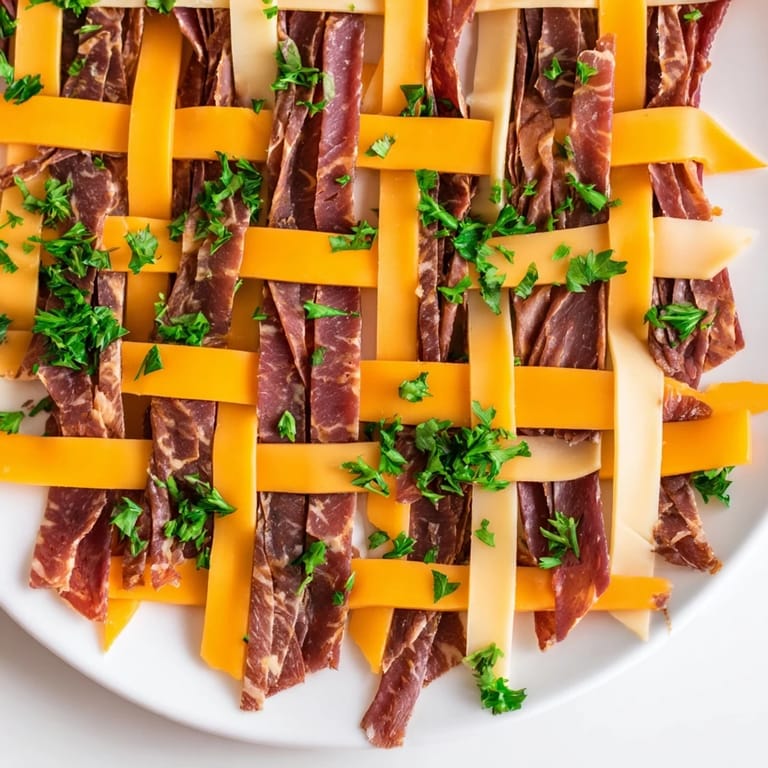
- Lay out half your jerky strips vertically, mixing the three colors so they bounce off each other. Don't overthink it—you're going for playful, not perfect.
- Start the weave:
- Take your first cheese strip and begin threading it horizontally over and under the jerky, alternating which cheese you use every other strip. This is meditative, like braiding but with way more flavor.
- Keep the pattern going:
- Add more jerky and cheese in alternating directions, switching colors as you go. You'll start seeing the tartan emerge, and it's genuinely satisfying.
- Set it gently:
- Once you've woven everything, press down softly so the pieces hold together without squishing them. You want it structured but still proud of its layers.
- Finish with intention:
- Trim the edges if you want clean lines, then scatter your herbs over the top. That final touch transforms it from clever to restaurant-worthy.
- Bring it to the table:
- Serve it whole and let people appreciate the work, or slice it into squares for easier grabbing. Either way, watch it disappear.
 Pin It
 The real magic happened when my son asked if he could help arrange it, and suddenly we were working together in the kitchen, him narrating the colors like he was a fashion designer. That's when I realized this appetizer isn't just about impressing people—it's about the moments you create while making it.
Choosing Your Jerky Wisely
Not all jerky is created equal, and this is where brand matters. I learned this the hard way after using some gas station jerky that was more brittle than flexible, and the whole thing fell apart in my hands. Now I hunt for jerky that has some texture to it, something that holds together when you manipulate it. Look for strips that bend slightly rather than snap, and taste a piece before committing to the full amount. Your eyes deserve a beautiful pattern, and your mouth deserves jerky that actually tastes good.
The Art of the Weave
Weaving might sound intimidating, but it's really just an over-and-under dance that becomes meditative once you get into a rhythm. The trick is to not pull too tight—you're creating a woven pattern, not a compression test. I used to get frustrated when a strip wouldn't slide through cleanly, but then I realized the issue wasn't the strips; it was that I was trying to force them. Slow down, guide gently, and let the layers settle naturally into place. You'll know when you're doing it right because the whole thing starts looking intentional instead of accidental.
Serving and Storage Secrets
This dish is at its absolute best served fresh, when everything still has its natural give and the flavors are crisp and clean. If you need to make it ahead, cover it tightly with plastic wrap and refrigerate for up to two hours—any longer and the cheese starts to dry out and the whole thing loses its charm. The morning after I made one for a brunch, I learned this lesson when the plaid looked deflated and sad.
- Pair it with something crisp like a dry white wine, a light beer, or even apple cider for a non-alcoholic option.
- Cut it into squares for an elegant presentation, or let people break pieces off the main board for that casual, abundant feeling.
- If you're feeding vegetarians, swap the jerky for smoked tofu strips and it works beautifully—the pattern is what matters.
 Pin It
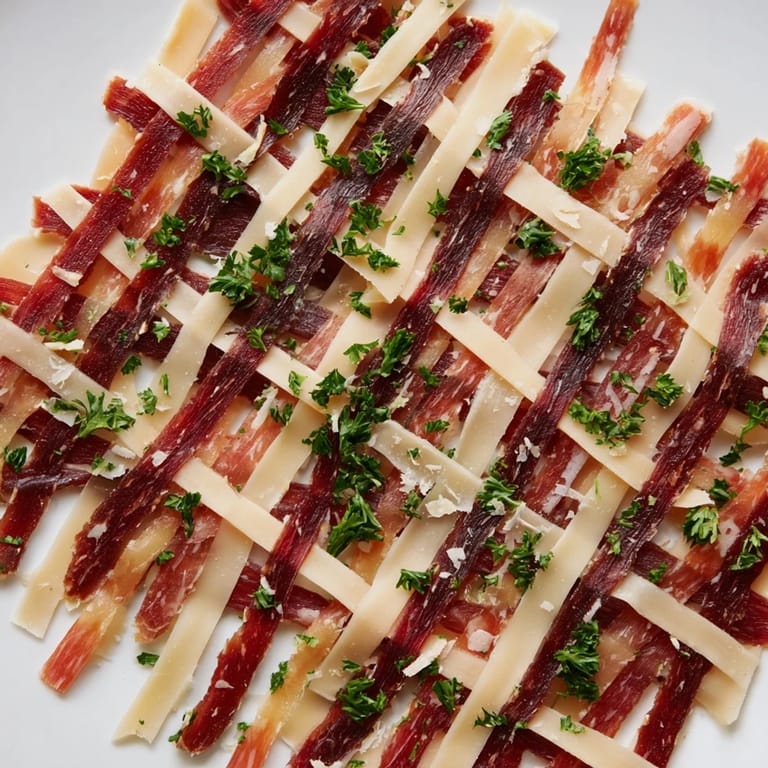
 This appetizer has become my secret weapon for feeling like a confident host without spending hours in the kitchen. It's fancy enough to make an entrance but honest enough that everyone can taste the quality of what you chose to put on that board.
Recipe Q&A
- → How is the plaid pattern created?
Alternating vertical strips of jerky are layered with horizontal strips of sliced cheese, weaving them over and under to mimic a plaid design.
- → Can this dish be prepared ahead of time?
Yes, cover tightly with plastic wrap and refrigerate for up to 2 hours to maintain freshness and shape.
- → What types of jerky work best?
A combination of beef, turkey, and pork jerky cut into thin strips offers contrast in flavor and color.
- → Are there vegetarian alternatives?
Vegetarian jerky or smoked tofu strips can be substituted to create a plant-based variation.
- → What beverages complement this dish?
Dry white wine, light beer, or apple cider pair nicely with the savory and creamy flavors.
- → How should it be served?
Slice into squares and arrange on a platter as part of a charcuterie or appetizer board for easy sharing.