 Pin It
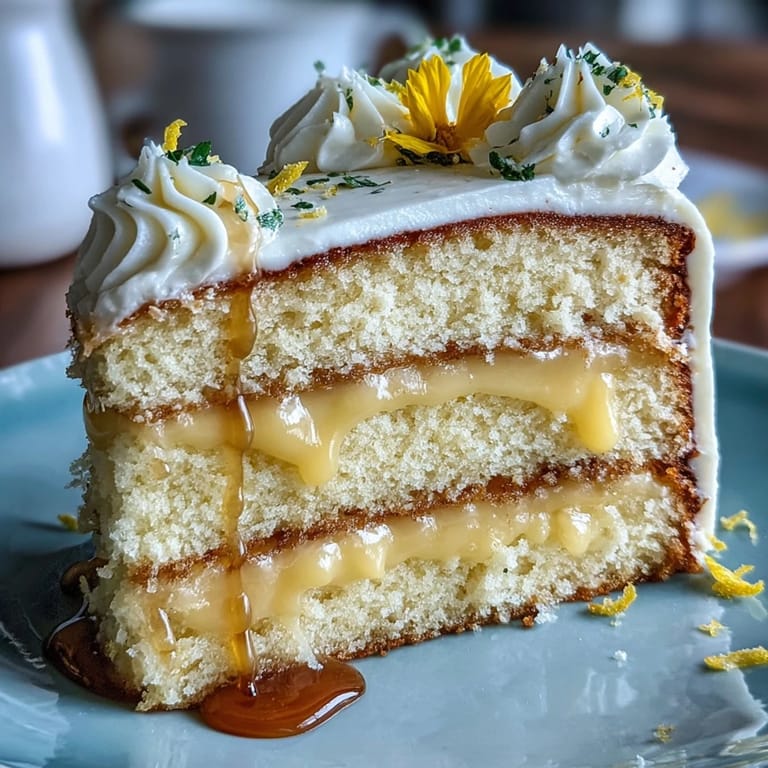
 There was once a spring afternoon punctuated by the zippy aroma of lemon zest, when the whole kitchen seemed to glow brighter than usual. Not every cake calls for a bouquet on top, but for Mother's Day I wanted something that felt both vibrant and delicate. I had just picked up a box of edible flowers from the Saturday market, their faces looking like confetti ready to celebrate someone special. So, this lemon curd layer cake was born—not just for its flavor, but for the sheer joy of layering sunshine and beauty onto a plate. Every time I make it, I marvel at how a handful of blooms turns the ordinary into a keepsake.
I still laugh about the year my sister tried to 'help' by assembling the cake before the layers cooled—our lemon curd nearly slid right off, but we managed to catch it, giggling and improvising with extra napkins. That blunder made for a sweet mess and an even sweeter memory, proving that even on imperfect days, a beautiful cake can bring everyone together around the table. Now, it's tradition for us to decorate with edible flowers as a team, arguing over pansy placement and sneaking tastes of whipped cream in between.
Ingredients
- All-purpose flour: Take a moment to fluff up the flour and spoon it gently into your measuring cup for a lighter, softer sponge.
- Baking powder & baking soda: The two work together for tender, tall layers—swap out old tins for fresh, so your cake rises proudly.
- Salt: Just enough to sharpen the lemony brightness without crossing into savory territory.
- Unsalted butter: Cream this until billowy and pale; cold butter won't emulsify as smoothly for the base of your batters.
- Granulated sugar: Balances the punch of the lemons—add slowly with the butter until you see a cloudlike texture appear.
- Eggs: Bring them to room temperature so they blend seamlessly; a little patience here rewards you with a velvety crumb.
- Lemon zest: The oils hold so much flavor—grate only the outer yellow and avoid the bitter white pith beneath.
- Fresh lemon juice: Squeeze it yourself for maximum zing; bottled juice can mute the spark.
- Vanilla extract: A splash is understated but crucial, rounding out all the citrusy notes.
- Whole milk: Room temperature is best—cold milk can curdle the batter and make the texture dense.
- Powdered sugar: This melts into the whipped cream, giving it that pillowy finish without any graininess.
- Heavy cream: Must be properly cold; when whipped, it transforms into the loftiest frosting.
- Assorted edible flowers: Skip the florist and track these down at a farmers' market or specialty grocer—only use blooms grown for culinary use.
Tired of Takeout? 🥡
Get 10 meals you can make faster than delivery arrives. Seriously.
One email. No spam. Unsubscribe anytime.
Instructions
- Prepare the pans and preheat:
- Set your oven to 350 F and line three cake pans, letting the parchment extend beyond the edges for easy lifting later.
- Mix the dry ingredients:
- Whisk your flour, baking powder, baking soda, and salt together—it feels soothing and sets the stage for perfect structure.
- Cream butter and sugar:
- Use your mixer on medium until the butter and sugar are pale and airy, then add eggs one at a time, making sure each disappears before the next joins in.
- Combine wet flavors:
- Stir in that aromatic lemon zest, juice, and vanilla until it smells irresistible and sunny.
- Incorporate dry and wet:
- Alternate adding the flour mixture and milk to prevent lumps, beginning and ending with flour—stop mixing the second streaks disappear.
- Divide and bake:
- Divide batter among pans and gently smooth; the oven does the rest, baking until a skewer slides out clean (about 25-28 minutes).
- Cool the cakes:
- Let them rest in the pans for 10 minutes, then flip onto racks—listen for that soft sigh of release as they cool completely.
- Cook lemon curd:
- In a saucepan, gently whisk together eggs, sugar, zest, and juice over medium; stir constantly until it clouds and thickens, then melt in the butter for glossy curd.
- Chill the curd:
- Pour curd into a bowl, press plastic wrap onto its surface, and refrigerate so it stays smooth and spreadable.
- Whip the frosting:
- Whip cold cream, powdered sugar, and vanilla together just until peaks stand tall, stopping before it goes grainy.
- Assemble layers:
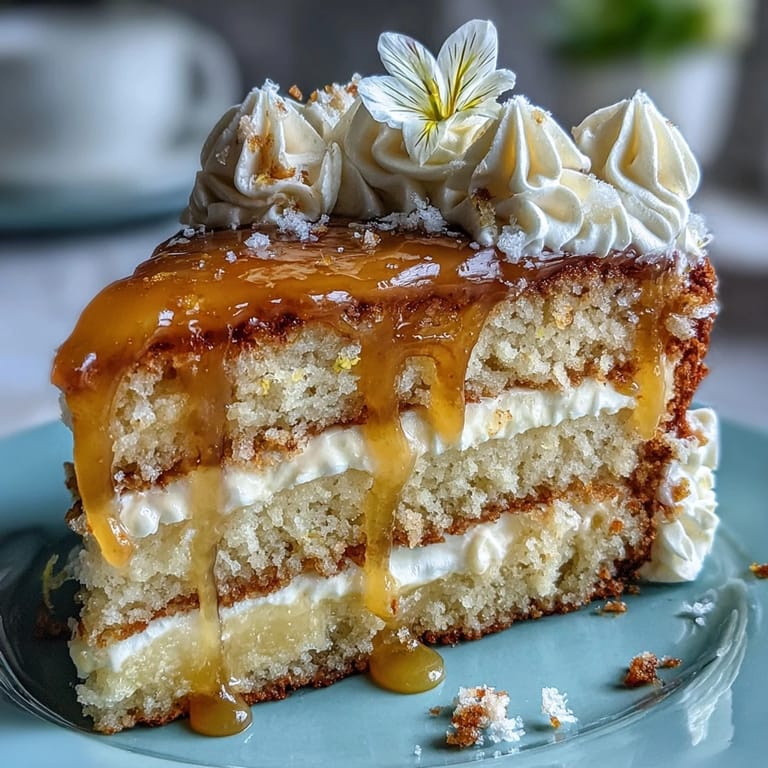
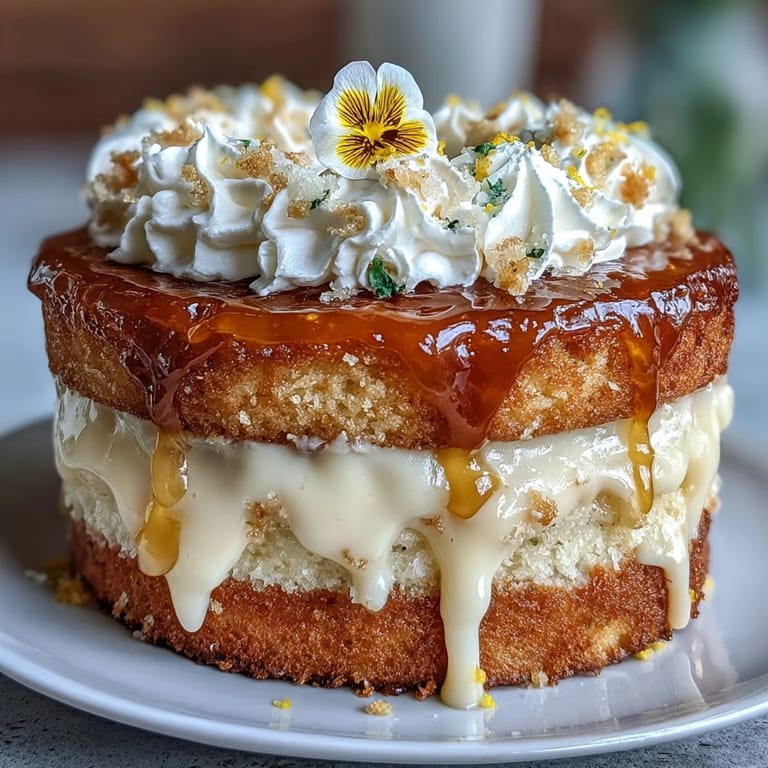
- Layer cake alternately with swathes of cream and gleaming curd, finishing with a generous crown of whipped cream on top and around the edges.
- Add flowers:
- Arrange the edible flowers just before serving; scatter them like confetti or carefully compose them for an elegant look.
 Pin It
 One Mother's Day, we ate this cake in the garden, sun dappling through the trees, and everyone paused to admire how the flowers mirrored the spring waking up around us. That day, the cake was more than dessert—it was laughter, gratitude, and color on a plate.
How to Pick Edible Flowers for Your Cake
After some trial and (occasionally colorful) error, I learned that fresh, pesticide-free edible flowers are best sourced from farmers markets in spring. Always triple-check their safety—even the prettiest blossom can surprise you with an unexpected flavor. Pansies and violas hold up beautifully while rose petals bring a light fragrance, but stray from strong or bitter varieties unless you want a bold punch.
Lemon Curd Without the Stress
My first lemon curd attempt was a constant worry over scrambling the eggs, but patience and gentle stirring do the trick. Keep the heat medium-low, and swap to a silicone spatula for a silky consistency. If you ever spot streaks, just strain the curd before chilling—no one will ever know.
Making Ahead and Serving Beautifully
On busy holidays, I've baked the cakes and made the lemon curd the night before to save morning chaos—just let everything reach room temperature before assembling for best texture. Top with flowers at the last minute to keep them fresh and lively. If you have leftover cake, it actually tastes brighter the next day, as the flavors settle in harmony.
- Chill the lemon curd covered with plastic touching the surface to prevent a skin from forming.
- If splitting the tasks, make the whipped cream just before decorating for maximum loft.
- Transport in pieces, then assemble at your destination for pristine layers and flowers.
 Pin It
 May this cake bring a burst of sunshine and a swirl of memories to your next celebration—every slice tells a little of your story. Enjoy every zesty, flowery bite with the people who make your days brighter.
Recipe Q&A
- → How do I prevent curd from curdling?
Whisk constantly over medium heat and remove from heat as soon as the curd thickens. Tempering eggs by slowly adding a bit of the warm lemon mixture before returning to the saucepan helps maintain a smooth texture.
- → Can I make components ahead of time?
Yes. Bake the sponge and chill; keep lemon curd chilled in an airtight container for up to 3 days. Whip cream just before assembly for best volume, or stabilize it if making earlier.
- → Which edible flowers are safest to use?
Use food-grade flowers such as pansies, violas, nasturtiums, or ensured chemical-free rose petals. Always verify the source and avoid flowers sprayed with pesticides.
- → How do I make the curd firmer for stacking?
Cook the curd a little longer until it thickly coats the back of a spoon, then chill thoroughly. Chilling overnight firms the curd and makes it easier to spread between layers without sliding.
- → Any tips for even cake layers?
Divide batter by weight between pans for uniform thickness, rotate pans halfway through baking if your oven has hot spots, and level the tops with a serrated knife if needed before assembly.
- → Can I substitute dairy or eggs?
Substitutions affect texture: using plant-based milk and vegan butter can work for the sponge, but the lemon curd relies on eggs for thickness. Consider a thickened fruit curd alternative or stabilized vegan curd if avoiding eggs.